Jim C. Hines
  • Blog
  • About
    • Press Kit
    • Cover Posing
    • Privacy and Other Disclaimers
  • Bookstore
    • Autographed Books
  • Bibliography
  • Appearances
  • Contact
    • Speaking Engagements
  • Patreon
  • Facebook
  • Bluesky
  • Tumblr
  • Goodreads
  • Instagram
RSS
November 6, 2013 /

Sandra Tayler Talks About The Strength of Wild Horses

Sandra Tayler is the author of Hold on to  Your Horses, a gorgeous picture book about an impulsive child named Amy. (You can read the book as a free .pdf.) From my review of that first book:

One of the most poignant moments in the book is when Amy breaks down and asks, “Why am I always the problem?” For these children (and their parents and caretakers), Tayler’s book provides a way to understand and start to control their impulsive behavior.

I was delighted to find out Sandra was kickstarting The Strength of Wild Horses, a second book about Amy. Like the first book, this one will be illustrated by the marvelous Angela Call. I’m happy to have Sandra here to talk about her hopes and goals for this new book.

You can learn more and support her Kickstarter at http://www.kickstarter.com/projects/1635154756/the-strength-of-wild-horses.

#

1. You said you wrote Hold on to Your Horses, your first book about Amy, “because [your] daughter needed a story that helped her visualize and control her impulsive ideas.” What prompted you to write The Strength of Wild Horses?

I started seeing the need for a second book almost as soon as the first book was done. My daughter was finally able to visualize her impulsive creativity as something she could control and steer, but then she looked at me one day and told me that sometimes she got tired of steering. “What are wild idea horses good for?” she cried. I had a dozen answers for her, but they were grown up answers. A six year old is not going to be comforted by the fact that some day, when she is all grown up, her headstrong creativity will make her a fantastic project leader in the workplace. I had to find an answer that showed her how wild ideas can make a child’s life better. Strength of Wild Horses is my answer.

2. Has your daughter read the new book? What did she think?

She has and she likes it. I took much longer than I would have liked to find the answer to her question and there were also business and funding issues that delayed the project for six years. My daughter is twelve now and relates to the story in a very different way than she did when she was in Kindergarten, but she loves the way that I lifted some actual events from her life and folded them into Amy’s story. Some of the chaos that Amy creates is based on real life events.

3. I know you as a very loving and dedicated parent, and you’ve blogged about some of the challenges and rewards of being a parent. Can you talk a bit about stories as a way to help children learn and grow?

We all need stories, both adults and children. Stories help us explain–to ourselves–who we are and how to go forward. The right story can completely change how a person views themselves, which is what I accomplished with Hold on to Your Horses. Once my daughter had that story she was able to see that she could have an unfortunate impulse without being a bad person. Even more valuable was her increased ability to choose how to express her ideas so that they didn’t cause problems. Strength of Wild Horses takes that even further, showing that the existence of headstrong ideas can make the world a better place. These are powerful stories to hand to a child who struggles with high energy creativity that gets them in trouble. Over and over again through my parenting I have helped my kids find the stories they needed. I sometimes review books that helped us over on the Hold on to Your Horses facebook page. Stories can change the world by changing the people in it.

4. Angela Call’s artwork is bright, colorful, and gorgeous. What’s the story of how you brought her into the Horses projects?

I wrote Hold on to Your Horses because my daughter needed a story. Then because she was only six, I knew that the story needed pictures. I’m married to a cartoonist, so it seems like that would have an easy solution, except my husband and I both agreed that his art style wasn’t right. Instead we put out the word on the internet that I was looking for an artist. I couldn’t promise that the project would ever make any money, but I did promise that the artist would make half of any profit. I was fortunate that Angela saw the open call and decided to submit. Angela and I have never met in person. We do most of our communication via email.

5. This isn’t your first time working with Kickstarter. Assuming you meet your fundraising goal (and we hope you do!!!), what happens next?

If this project funds it will pay for a print run of 2000 books and cover the costs of Kickstarter, packaging, and postage. I’ve already paid Angela and advance out of pocket. In order for me to get paid, I’ll have to sell enough of those books. I’d like to get paid eventually, but more important is getting to make the book and making it available to people who need the story. If the project does really well, I have other stories to tell and Angela can draw really beautiful pictures…

6. Okay, time for a Very Serious question: why horses as opposed to, say, goblins?

Goblins are amazing and wonderful. Using them for the book was quite tempting, but my daughter loved horses at the time I wrote the story for her. I had to pick the animal which always focused her attention. Being able to tap into the common usage of the phrase “Hold on to Your Horses” was an added bonus.

7. Anything else you’d like to add or talk about?

I’d just like to express sympathy and support to all the parents out there who are struggling to understand their children. I think that is pretty much every parent at some point in their parenting life. Raising kids is hard, particularly when you can see what is coming and you imagine how difficult it could be. Hang in there. Expose your kids to all sorts of stories and pay attention to which stories your child loves. That can be a key of connection and understanding between you if you let it be.

November 5, 2013 /

Cover Pose Calendar

The 2014 “Year of the Poser” cover pose calendar is now up for sale.

As with last year’s cover posing fundraiser, my goal this year was to raise additional funds for the Aicardi Syndrome Foundation. Aicardi Syndrome affects 1 in 105,000 girls born in the U.S. It causes brain malformation, visual problems, seizures, developmental delays, and other medical complications. Most research puts the life expectancy for people with Aicardi between 8 and 16 years.

As a special bonus, not only do you get a calendar full of ridiculous poses, but each calendar is autographed both by me and by bestselling author Patrick Rothfuss. (I hadn’t expected Pat to take the time to autograph several hundred calendars, but I’m thrilled that he did!)

Cover Pose Calendar

My thanks to Pat Rothfuss, Nicole Everard, Kat Lemmer, and everyone at the Tinkers’ Pack, as well as my wife and photographer Amy Hines, my celebrity guest posers John Scalzi, Mary Robinette Kowal, Charlie Stross, and Pat Rothfuss, guest photographer Al Bogdan, and everyone who supported the fundraiser last year and helped us to make the calendar goal.

Supplies are limited, so order fast!

Please spread the word. And if for some reason you don’t feel the need to have a calendar with ME in various awkward and contorted poses but you still want to support the Aicardi Syndrome Foundation, you can do so on their website.

November 5, 2013 /

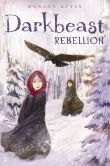
Darkbeast Rebellion, by Morgan Keyes

Darkbeast Rebellion [Amazon | B&N | Mysterious Galaxy] is the second book in Morgan Keyes‘ Darkbeast trilogy. (I reviewed the first book last December.)

In a world where children are bound to magical darkbeasts, intelligent companion animals who are supposed to take their children’s sins and faults into themselves, Keara has defied tradition by refusing to ritually kill her darkbeast Caw. This makes her an outcast and a target for the Inquisitors.

We pick up where book one left off, with Keara, Goran, and Taggart on the run with their darkbeasts, searching for the darker community — others who have chosen to spare their darkbeasts and live in exile. But what they find is not what Keara had expected. She feels out of place and … empty. Day-to-day life in hiding isn’t what she had imagined it would be.

I like old Taggart’s response to Keara’s complaints about boredom and routine:

“Most of life is routine. Routine is what keeps us fed, keeps us safe. Keeps us ready for those few, heart-stopping moments when we must fight for what we believe.”

Let’s just say that as I approach my 13th year working for state government to support my family and my writing, that line resonated.

Without spoiling too much, Keara soon finds herself wishing for boredom. We get a story of betrayal and political intrigue and power struggles and relationship drama and more.

It’s a fun and enjoyable read. As with book one, I liked the characters — particularly Caw, with his unapologetic greed for treats and his unwavering parental love for Keara. It was nice to see more of the politics of the world, and the conflict between the Princeps and the Inquisitor Ducis.

I think the title left me expecting more actual rebellion. There’s a lot of interpersonal conflict and growth, and a fair amount of setup for book three, but don’t pick up the book looking for epic battles between darkers and Inquisitors, with armies of ravens and rats and snakes and spiders swarming over enemy soldiers. Which was disappointing, because I kind of wanted to see that. But given where we end things in this book, I imagine the larger scale conflicts are coming soon.

You’ll want to read Darkbeast first, but if you enjoyed that one, you should pick up the sequel and join me in impatiently waiting for Keyes to finish the third book in the trilogy.

November 4, 2013 /

Legend of Korra: The Guide

Legend of Korra
2 x 9: The Guide

Full episodes available at Nick.com.

Episode Summary (from the Avatar Wiki): Korra seeks Tenzin’s help to enter the spirit world for the first time.

More

November 1, 2013 /

Cool Stuff Friday

Happy 50% off candy day!

Now have some cool stuff.

  • A 3-D Printed Dalek Transformer, by Ellindsey. Yes. More, please. (Link provided by temporus.)
    • Oh look – he made a 3-D Printed TARDIS Transformer, too!!
  • Princess Dalek!!!!!
  • I’m rather happy with how my own Halloween costume turned out.
  • I’m told most things that live in Australia want to make you dead. Then there’s the quokka, aka the Kangaroo Rat. It’s just ridiculously happy to see you. (Warning: Potential cuteness overload.)
  • Animals with pumpkins, from the annual Pumpkin Bash at Woodland Park Zoo in Seattle. (Link from Seanan McGuire’s Tumblr.)
  • Internet. In SPACE!!!
  • Paint War Engagement Photos.
  • Coma Niddy University presents: How Microorganisms Move.

October 31, 2013 /

“Gypsies” and Other Fantasy Beings

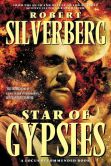
“…Romanies turn up with some frequency — never as charac­ters who happen incidentally also to be Gypsies, but because they are Gypsies, and because they serve a specific purpose. This purpose has, broadly speaking, three manifestations: the Gypsy as liar and thief either of property or (especially) of non-Romani children; the Gypsy as witch or caster of spells; and the Gypsy as romantic figure.” –Ian Hancock

#

The SF/F genre has a particular fascination with “Gypsies.” Maybe it’s the romanticized freedom of the road, the independence of a people who reject the soul-shriveling laws of the civilized world to live however and wherever they choose. Maybe it’s the mysticism, the magic of old Romani women and their curses. Maybe it’s the sex appeal of eager young lasses and virile men. Or maybe it’s just the fashion sense, because scarves and sparklies are cool!

I’m sure most of us recognize that by now, this has become a pretty common trope, even a cliche, in the genre. But hey, they’re fun. They’re part of the history of our genre. And stories never hurt anyone! “Gypsies” are just another fantasy race, like elves and mermaids and dwarves, right? It’s not like we’re talking about real people with real cultures and histories. [/Sarcasm]
  • “The 1997 figure reported by the late Dr Sybil Milton, then senior historian at the U.S. Holocaust Memorial Research Institute in Washington put the number of Romani lives lost by 1945 at ‘between a half and one and a half million.'” (Source)

Have you ever wondered where the term “gypped” came from? Let me put it this way. Saying you got gypped is right up there with saying you got “jewed,” based on the bigoted presumption that those people are all swindlers and cheats and thieves. But it’s not like those stereotypes cause any real harm or damage today, right?

  • “In the Czech Republic, 79% of respondents to a 2003-04 survey said they wouldn’t want Roma as neighbors.” (Source)
  • “[P]olice in Liguria gave out preprinted complaint templates for theft, which included a tickbox labelled ‘gypsies’ i.e. offering theft victims the chance to report Roma as the culprits. No other ethnicity was included on the form.” (Source)
  • Italian Interior Minister Roberto Maroni responded to a wave of violence against the Roma people with the quote, “That is what happens when Gypsies steal babies.” (Source)
  • Italy’s highest appeals court overthrew the conviction of six people for racially discriminatory propaganda, saying that their aversion to the Roma people, “was not determined by the Gypsy nature of the people discriminated against, but by the fact that all the Gypsies were thieves.” (Emphasis added; Source)

As long as we’re talking, how about a few more examples of prejudice and discrimination?
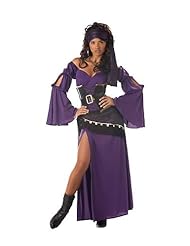
One of many "Sexy Gypsy" Halloween costumes.

  • “The European Court of Human Rights has affirmed that school segregation of Romani children (in schools for children with disabilities and in separate schools or classes in mainstream schools) constitutes illegal discrimination in judgments against the Czech Republic (2007), Greece (2008) and Croatia (2010). Despite these rulings, educational segregation of Romani children is systemic in many European countries.” (Source)
  • “The [Czech] government expressed its regret to Roma women who were sterilized without their consent but admitted the practice may still be taking place.” (Emphasis added; Source)
  • “[T]he Roma populations face considerable obstacles to the enjoyment of basic rights, notably in the fields of access to health care, housing, education and employment and are often disproportionately affected by poverty. Discrimination and racism, also resulting in violence, remain serious problems throughout the continent, and present a major impediment to the full enjoyment of human rights and fundamental freedoms.” (Source)
  • Police recently removed a blonde-haired, blue-eyed girl from the Roma family she was with. Because everyone knows those gypsies are child-stealers, right? “DNA tests have proved that a seven-year-old girl taken from a Roma family in Dublin on Monday is their daughter.” (Source)

Well, at least this kind of racism isn’t a problem here in the United States, right?
  • It’s not like we have major newspapers asking “Are the Roma Primitive, or Just Poor?“
  • Or major television shows telling stories of murderous, child-stealing gypsies.
  • Or retired police detectives writing articles about how “Gypsies choose a lifestyle of thievery, one that is as natural to them as eating and sleeping.”

I’m not saying science fiction and fantasy is full of people who are actively trying to be racist, or deliberately working to continue the kind of hatred and violence and bigotry described above. I suspect a lot of us, especially in the U.S., barely give it a second thought.

We don’t even realize the term “gypsy” is offensive and/or distasteful to many, basically a racial slur.

Overt, deliberate, blatant racism tends to be easier to identify and denounce. I doubt most authors are deliberately trying to base their writing on racist stereotypes, any more than I think costume companies said, “Hey, the world doesn’t have enough racism or sexism yet, so let’s do another line of ‘Sexy Gypsy’ costumes!”

That doesn’t change the fact that we’re buying into the racism. As authors, we’re perpetuating it. We’re reinforcing the stereotypes and teaching our audience that this is what the Roma people are — that they’re magical, hypersexual thieves.

I remarked this past weekend that I love my SF/F geeks, but we’ve got some issues. Our complicitness in ignoring or erasing real people and replacing them with cliche and stereotype is one of them.

We need to do better.

October 30, 2013 /

My Keynote from #SiWC2013

While I was at the Surrey International Writers’ Conference last week, I gave my very first Keynote Speech on Saturday night. What follows are my notes for the speech, though I embellished and changed a few things when I was up on stage.

My thanks to Laura Taylor, who was kind enough to record and share the speech on YouTube. It’s broken into three parts.

  • Part 1
  • Part 2
  • Part 3

A number of people asked about the cancer story I mentioned. That story is called “Stranger vs. the Malevolent Malignancy,” and just came out in Unidentified Funny Objects 2. (I’m hoping to get it published online once the exclusivity period in my contract is up.)

It’s four days later, and I’m still a little overwhelmed by the response to my first keynote. (I got saluted by a Mountie!!!)

Thank you all.

#

More

October 28, 2013 /

I Went to Canada … AND SURVIVED! (#SiWC2013)

I’m back from the Surrey International Writers’ Conference in Canada, and I had a blast. I got in at midnight on Thursday, which was 3 a.m. my time, so I may have been a bit out of it that first morning.

It was my first time at this conference, but it came highly recommended by Mary Robinette Kowal. As usual, Mary was right. It was well-organized, with a lot of fun and friendly people from a variety of genres. I gave two workshops (one on diversity in your writing, and one on using social media), did a bunch of one-on-one Blue Pencil Sessions to talk about people’s works-in-progress, and then they let me give a keynote address on Saturday. This was my first time doing a keynote, and I was a bit nervous about it, but it went over very well. (More on that later.)

I also got to meet MT O’Shaughnessy and Silvia Moreno-Garcia, two Vancouver-area writers and generally wonderful people who stopped by to say hi. Silvia just sold her debut novel to Solaris, by the way. And she was kind enough to give me an anthology she edited and a collection of her own work. Which was perfect timing, since I finished the other book I was reading on the flight out.

More coherent thoughts later. I didn’t get back home until late, and was greeted by a car with a dead battery waiting for me in the airport parking lot. I blame Dementors. Fortunately, the nice security guard at the airport had a portable magic box that — eventually — made the car work again.

My thanks to Kathy Chung for inviting me, to all of the staff and volunteers who put the convention together, and to all of the authors, editors, agents, and everyone else who made it such a welcoming and positive experience.

Now to steal a page from Susanna Kearsley and start plotting how to get myself invited back next year! 🙂

October 24, 2013 /

Surrey International Writers’ Conference

Tonight I’m off to the untamed and exotic wilderness of Canada for the Surrey International Writers’ Conference. Don’t worry, I’m packing plenty of moose repellant!

I’m really looking forward to this. I’ve heard good things about the conference, and there’s a great lineup of guest professionals.

My schedule for the weekend:

Friday:

  • 9:30 a.m. Opening Session.
  • 10:30 a.m. – Noon. Blue Pencil Sessions.
  • 3:30 – 5 p.m. Workshop: Writing Diversity. In which a straight white dude talks about his ongoing process of creating more realistic and honest diversity in his work, including the danger of stereotypes and tokenism, his various mistakes and successes, and most importantly, the need to never stop listening.

Saturday:

  • 9:30 a.m. Opening Session.
  • 10:30 a.m. – Noon. Blue Pencil Sessions.
  • 3:30 – 5 p.m. Workshop: Blogging, Social Media, and Self-Promotion. “If you’re going to be an author, you HAVE to do online promotion ALL THE TIME!” Or maybe not so much. Join a Hugo award-winning blogger as he talks about what he’s tried that worked, what failed miserably, and the unanswerable question of whether or not it’s worth it.
  • 5:30 – 7 p.m. Book Fair. (Signing and cocktail social.)
  • After Dinner: Keynote Address. (That’s right, they’re letting me do a keynote! Bwa ha ha ha!)

Sunday:

  • 9 a.m. Opening Session.
  • 9:30 – 10:45 a.m. Blue Pencil Sessions.

I expect to be thoroughly exhausted by the time I get back late Sunday night. I also expect to have a great deal of fun. I may even post the occasional update over on Twitter. (They do have internet in Canada, don’t they?)

October 23, 2013 /

Interview with a Fan Activist: Chris Barkley

Chris Barkley has been active in fandom since 1976 as a member of the Cincinnati Fantasy Group, has attended 27 Worldcons and several hundred other conventions, and is currently employed at one of the best bookstores in the U.S., Joseph Beth Booksellers. (And I’m totally not just saying that because I want them to keep stocking my stuff!)

Chris has been working hard to try to establish a Best YA Novel Hugo Award. You can visit the discussion page on Facebook.

#

1. You described yourself as a fan activist. How does this differ from the SMOFs of legend? What tasks and trials must one complete to become a fan activist?

Well, I’ll put it to you this way; I would NEVER admit that I am a Secret Master of Fandom. I don’t think that I am; I don’t have any control over anyone nor do I have desire to. I was a convention chair once (in 1986) and I was quickly cured of that peculiar malady.

To be perfectly serious, I don’t think anyone who does identify themselves as a SMOF does either. People who embrace that term are basically people who run sf conventions. They do so because it is fun (at least some of the time), they provide a valuable service to fans and they continue a distinguished tradition that stretches all the way back to the Depression Era.

In the past 15 years or so, I would describe my activities as that of a fan activist. (This is not to be confused with the term “fanac,” an older slang term for fannish activities.) I truly became an activist when I read an Octoober 1998 Entertainment Weekly a feature article on the “Sci-Fi’s Top 100”

Needless to say, I was appalled by the choices of the EW staff (The Jetsons, #52 were ranked over Babylon 5, #97; C’MON MAN!) and the next thing I knew, I was busily concocting my own top 100 as an article for Mike Gyler’s File 770.

The very first thing that I learned as a fanzine writer was that I had to develop a very thick skin. No matter how well thought out and written you may think your article and point of view is, there will ALWAYS be some antagonist or snarky person out there, trying to do anything in their power to bring you down and mount you on their wall like a trophy.

As an activist, I feel as though you have to walk a fine line; between your utter conviction that you are right and they, whoever they are, are wrong AND feeling flexible enough in your beliefs where you can admit that you are wrong or can compromise on a position you take.

Paradoxically, I really don’t relish being in the spotlight. I have not been rewarded nor have I taken any credit for the work I have done in Worldcon press offices or on Hugo Award categories. I am not a celebrity nor do I have any desire to be one. I am of the opinion that those sort of distractions undermine my integrity and work. I relish my privacy. I try keep to myself grounded, not act in very pretentious manner or make a spectacle of myself. I say try because I have been guilty of that in the past.

The primary thing I keep in mind at all times is that in the long run, the only power I actually have is to persuade other people to either try something (like my current project for a Young Adult Category Hugo Award) or to do the right thing (voting for motions at a public meeting, sometimes under very hostile conditions).

2. Diversity in SFF fandom. Do you think it’s a problem, and if so, where do you think that problem comes from and what can we do about it? If not, what are you seeing that makes you feel that way?

More

«< 116 117 118 119 120 >»

Coming June 29, 2027

Unchosen Ones
Amazon | B&N | Bookshop

Free Fiction

  • Stranger vs. the Malevolent Malignancy, at Podcastle
  • The Creature in Your Neighborhood at Apex Magazine
  • Gift of the Kites at Clarkesworld
  • Goblin Lullaby (audio) at PodCastle
  • Spell of the Sparrow (audio) at PodCastle

Banner artwork by Katy Shuttleworth.


↑

Jim C. Hines