|
Previous diabetes posts are available by clicking the diabetes tag. My father has had type 1 diabetes for 36 years. A long time ago, I remember him talking about the disease, saying it was strange to know what would probably kill him. When your Dad says something like that, it sticks. When you’re diagnosed with the same disease years later, those words come back again loud and clear. Of course, these days we’re better off, with five-second glucose tests, insulin pumps, and the first generation of continual glucose monitoring systems (for those with good health coverage and access to such things). I’ve been able to keep my diabetes under pretty good control for more than a decade. With the standard disclaimer that I’m not a doctor, I’ve seen what uncontrolled diabetes can do. I used to play racketball with a man who lost his foot. My mother donated a kidney to a family friend who was on dialysis. My father has good control, but has lost a little sensation in the fingertips. In some ways, I think of diabetes as a video game. A serious game, but a game nonetheless. The object is to keep my score (blood sugar) between 70 and 140. Use food, exercise, and insulin to stay within the bounds (and don’t piss off the diabetes fairy on level six). When the score dips below 70, I start to get into trouble. Low blood sugar (hypoglycemia) is an immediate danger. I sweat and feel shaky. My brain gets a little fuzzy. I’ve never been drunk, but I imagine it’s a bit like this, with confusion and loss of coordination, not to mention some mood swings. If it gets worse, you can have seizures, slip into a coma, and die. Hypoglycemia can hit fast and hard. I usually feel when I’m getting low, and can scarf the nearest convenient source of glucose. (I keep a candy dish on the bedside table.) But if you go low too often, you can start to lose that awareness, which is both scary and dangerous. Whereas hypoglycemia hits fast and hard like a barbarian, high blood sugar (hyperglycemia) is the ninja of diabetes. My blood sugar can creep up to 200 or more without me noticing, because there’s no immediate effect. But in the long term, the ninja will Mess You Up. High blood sugar can damage the eyes, kidneys, nerves, heart … it’s nasty.1 Sugar-laden blood cells rip up the tiny blood vessels of the eye. Nerve damage causes loss of sensation on peripherals, so you might not notice that infected cut on your foot until it spreads. And diabetics tend to heal slower… In the meantime, high blood sugar paradoxically means your body isn’t able to use the sugar in your blood, so you begin to rapidly break down fat for energy, releasing toxins into your system. This can lead to a condition called diabetic ketoacidosis. It’s an effective way to lose weight … if you don’t mind killing yourself. (I dropped 30 pounds before I was diagnosed. I don’t want to know how long it took for my system to recover.) Brief soapbox: I’ve known people who deliberately went off insulin in order to lose weight. That’s right, we’re so freaking obsessed with weight loss that poisoning killing ourselves is an acceptable way to drop a few pounds.2 High blood sugars don’t generally kill you right away. If I go to a con and enjoy cheesecake after diner, my sugar might hit 250 a few hours later. But I test often at cons, allowing me to bring it down pretty quickly. My HBA1C, a long-term average measure of blood sugar, usually comes back around 6.0 (upper normal). Even though I have the occasional spike, my overall control is pretty darn good. Perfect control isn’t possible yet, but I don’t plan to let this thing kill me. Taking care of the disease is a pain in the ass, but it’s far, far better than the alternative. Comments and questions are welcome, as always. — Previous diabetes posts are available by clicking the diabetes tag. People often make assumptions about what I can and can’t eat as a type 1 diabetic. Here’s the thing: I can eat anything I choose … as long as I take the correct dose of insulin to go with it. Therein lies the trick. Diabetes Math 100: Introduction to D-Math I try to keep my blood sugar goal between 70 and 140. I’ve discovered that one unit of insulin drops my blood sugar about 60 points, so if my blood sugar is 200, I’ll program the insulin pump to give me 1.5 units. With meals, you’re worried about glucose. This means you primarily count carbohydrates. I need to take about 1 unit for every 8-9 grams of carbs. Pop Quiz: My blood sugar is 160, and I’m sitting down to a meal with 90 grams of carbohydrates. How much insulin do I take? I’ve also found that I need more insulin for my first meal of the day. Closer to 1 unit for every 7 grams of carbs. A 50 gram breakfast gets about 7 units. So now there are two ratios to remember. So far, so good. Diabetes Math 200: Graphing Over Time Those ratios are nice, but some foods are digested and absorbed more quickly than others. Humalog insulin has a pretty stable absorption rate, peaking after about 90 minutes. This can be a problem. A number of factors affect the absorption of that meal you just ate. Some things, like orange juice, get absorbed pretty darn fast. Others, like pasta, can take a long time to absorb, especially larger noodles. (Lasagna is a killer.) The insulin pump is programmed to deal with this using a feature known as the square bolus. Basically, you program two doses of insulin: one to be delivered immediately, and a second to be delivered at a steady rate over several hours. Pizza has a pretty high fat/grease content, which also slows down absorption. So for pizza night, I’ve figured out the proper dose is around 6.5 units now and a square bolus of 10 units over 6 hours. Lasagna is 2 units now, 6-7 over about 5 hours. A piece of fruit? 1 unit now, no square bolus. Diabetes Math 300: Multivariable Equations Now things get exciting. Remember those ratios we learned back in the 100-level class? They don’t actually stay the same from day to day. Here are some of the factors that can mess with your numbers:
Conclusion: It’s not that diabetics can’t eat certain food. But I’ve chosen to eliminate some things from my diet. I drink diet pop instead of regular; I don’t usually drink milk; I’ll eat ice cream, but rarely. Not because I can’t, but because eliminating those things from my diet reduces the number of variables and makes it easier for me to calculate my dosage. Even so, those calculations are often a best-guess, and I’ll usually check my sugar 2 hours after a meal and adjust for any errors. That’s how it works for me as a type 1 diabetic. Questions are welcome, as always — I’m pretty open about this stuff. —
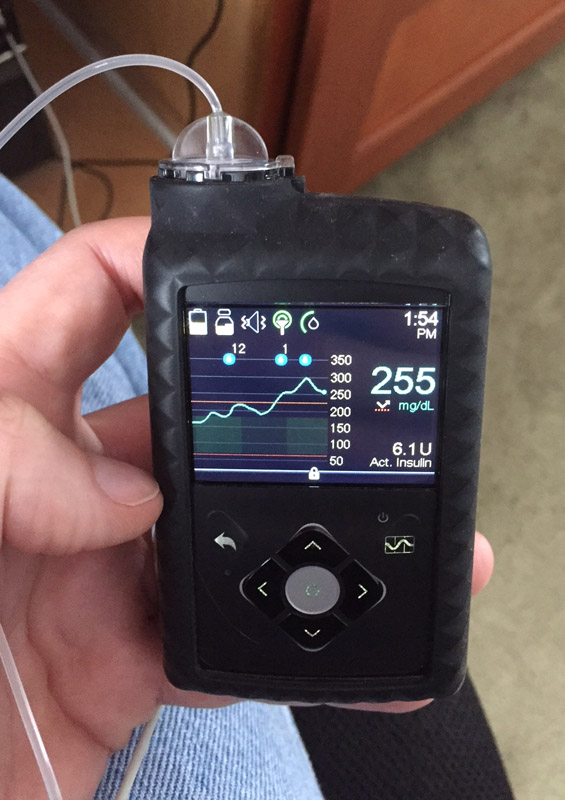
From this week’s episode of Criminal Minds, “The Uncanny Valley”: “Diabetics metabolize everything they consume differently. Food, drink, drugs … it all gets broken down into blood sugar.” Ignoring the fact that not all food and drink gets broken into blood sugar (Coke Zero, anyone?), you’re telling me my drugs all turn into blood sugar too? Guess I’d better start taking insulin with my cholesterol pills from now on. The show also asserts that diabetics can metabolize drugs faster, and thus our victim could shake off the paralytic. (Which was being received via an I.V. drip.) This struck me at first as either poorly researched or poorly explained. So I spent this morning digging up research so as not to come off as an idiot when I wrote my rant, and what do you know. I came across a 2007 study from The National Institute of Diabetes and Digestive and Kidney Diseases which states: In fact, type 1 diabetes not only leads to activation of drug metabolic genes, but also has a profound effect on the metabolism of certain drugs. Mice with induced type 1 diabetes rapidly clear their systems of a compound that induces temporary paralysis, while normal mice cannot. From that same article, “Controlling the diabetes reversed the effect: when insulin was given to the mice, the CAR-induced genes turned off. “ So in theory, since this woman was off her insulin, there might have been a window where she would have thrown off the effects of the drugs before falling into a diabetic coma. I’m not finding anything to support the idea that drugs all break down into blood sugar, though. That one still strikes me as goblin dung. According to the article above, a diabetic with out-of-control glucose doesn’t clear the drug by breaking it down into sugar, but because (in mice, at least) this activates certain genes that clear the drug from the system. So, I’m cranky about the “Everything turns into sugar” bit, but it looks like they did the research on the rest. Thanks for that, Criminal Minds — the widespread laziness and misinformation spread in most books and shows when it comes to diabetes is a huge peeve of mine. On that note, if any of my writer friends are ever doing a story that includes diabetes and have questions, please don’t hesitate to ask. I’m not a doctor, but I can give you the basics and tell you what it’s like to live with the damn disease. Also, I think I have a man-crush on Dr. Reid. • Book signing tonight at 7:00 at Nicola’s Books in Ann Arbor. I’m sacrificing a tribble to the weather gods for a blizzard-fre • This is why I shouldn’t be allowed to play with Photoshop. I end up making LJ icons and escalating the plotbunny wars. (Help yourself to the icon, if you’re interested.) # I realized that after five diabetes posts, I had yet to talk about the basics of the disease. Remember I’m not a doctor – everything that follows is based on my personal experiences and understanding. For you non-diabetics out there, it works like so. You eat food. Your body breaks the food down into, among other things, glucose in your blood. Your pancreas secretes a hormone called insulin that allows you to use that glucose for energy and keeps the glucose in your blood at a normal, healthy level (around 100 mg/dl). There are two types of diabetes (three if you include gestational). Type two is the most common. Your body makes too little insulin, or else your cells aren’t able to use it efficiently. A lower-carb diet can help, as do exercise and weight loss (your body might not produce enough insulin for 250 pounds, but could have enough for 175). There are meds that improve insulin absorption. In some cases, you also inject insulin to supplement what your body makes. I’ve got type one diabetes, which means my pancreas is a lazy bastard that quit producing insulin altogether. Stupid pancreas. For me, the treatment is black and white: I either take insulin or else my blood sugar rises until I go into a coma and die. Type one is known as juvenile diabetes, giving folks the false impression that I got it as a child. (I was 24 when I was diagnosed. My blood sugar was over 600 mg/dl.) I started with injections, taking a long-acting insulin shot to manage my baseline needs and short-acting insulin at meals. Because of the way I eat and live, I was taking 6 or 7 shots a day to keep things under control. So I switched to an insulin pump, which gives me a baseline insulin rate throughout the day and allows me to give myself more at the press of a button. When I eat, I guesstimate the amount of glucose I’ll be getting from that meal and take insulin to match. I check my blood sugar levels about two hours after each meal. Too high, I take more insulin. Too low, I snack. (If you see me acting drunk and confused, shove some carbs my way.) What this means, among other things, is I can eat whatever the heck I want, as long as I take the insulin to cover it. I get cranky when people tell me what I can and can’t eat. Yes, I had a donut yesterday. I also took more insulin and checked my blood sugar an extra time. I do adjust my diet somewhat to keep things manageable. For example, I switched to diet pop because diet has zero carbs, meaning I can drink it without worrying about taking insulin. On the other hand, when I was first diagnosed, I did extensive “research” to figure out exactly how much insulin I needed to cover a hot fudge sundae (2.5 to 3 units of regular insulin plus 1 unit of long-acting). So when you ask what I’m allowed to eat, the answer is anything I want, so long as I’m keeping the disease under control. I was going to get into the consequences when the disease gets out of control, but this is getting long, so I think I’ll save that for next time. I’m very open about all this, so feel free to ask questions. You can also click the “diabetes” tag if you want to read any of my earlier posts about the disease. Last night I spent two hours at karate. (Got my promotion form for 3rd brown belt — woo hoo!) It was a good workout, but the class only meets once a week, so I’ve started trying to ride the exercise bike a few times a week too. There are a few reasons for this. My day job is very sedentary. I spend all day sitting at a desk answering questions, and then I come home and sit at a different desk and try to catch up on writing-related work. (If you’re going to do the writing thing, it’s a good idea to do something active, just to keep your body from atrophying altogether. /Soapbox) I’m also doing it for my mood. Yesterday was a craptastic day at work. Two hours at karate, and I was completely past it. Today was worse. A half-hour of pedalling and watching The Daily Show, and I’m in a much better space. Finally, exercise is good for the diabetes. The disease heightens the chances of trouble with the majority of your internal organs, so exercise is a good idea to help counteract that. But there’s a problem. You see, a good aerobic workout affects your metabolism for 24 hours or more. In my case, it’s a very noticeable effect, because it means I need less insulin for at least 24 hours after riding the bike. If I were to get the same amount of exercise every single day, I’d be all set. I’d just need to adjust my baseline dosage for post-workout mode, and remember to take less insulin at meals. But because I can’t do this every day, it means I get the joy of trying to manage two baseline rates, as well as calculating two dosage ratios at meals. Add to this the fact that my insulin needs vary from day to day anyway, depending on stress, exhaustion, activity, the phase of the moon, and Shadowstar only knows what else. So the exercise throws yet another variable into the mix. I’m pretty good at estimating my needs, but it’s not an exact science. The ironic part? Exercise usually helps you lose weight, right? Over the past month, as I’ve tried to sort out the new dosages, I’ve probably gained weight because I keep dosing too aggressively for post-exercise mode, which drops my blood sugar, which then requires the prompt application of M&Ms. It really is a rude disease. But the exercise has been a good thing overall, both emotionally and physically. I may need to keep testing more often, but I’ll get this sorted out eventually. And in the meantime, hey–how often do you get a medically valid excuse to eat chocolate? Help please! I need a small device I can use to make the “bleep” sound of censored swearing. I’m hoping to do a reading of “The Creature in Your Neighborhood” at my book launch next week, but there’s one scene that wouldn’t be appropriate without the bleeping. Any ideas on a device that might work? # I debated whether to share this one, but I decided what the heck. My ego can take it, and everyone can use a laugh on Monday mornings, right? My insulin pump is a pager-sized device which contains a plastic vial of insulin. It sends out a low base dose of insulin, and I can program it to deliver more as needed for meals and adjustments. That vial is connected to a tube, which goes to a small catheter in the belly (or wherever else you stick it.) Photo from Minimed (this is not Jim’s belly):
I use the 43″ tubing, which gives me plenty of … um … maneuvering room when changing clothes, etc. Extra tubing gets tucked in, and life is good about 98% of the time. Last week I had a 2% night. I was getting changed for bed, and the tubing got tangled with my pants. I didn’t realize this until it was too late, and the pants/tubing mess was tugging the catheter and sticker on my belly. I couldn’t straighten up without ripping the catheter out. (And there’s a sentence you don’t read every day.) I tried to yank the pants back up, but they were binding my knees, and I started to fall. Graceful as ever, I turned the fall into a hop. My other foot came down square on the edge of the laundry basket, wrenching my little toe. At this point, some primitive self-preservation instinct in my brain screamed Just surrender to the inevitable before you destroy half the bedroom hopping about like a one-legged kangaroo on an LSD trip! I fell. There was an earth-shattering kaboom. My wife rushed out thinking … okay, I don’t know what she was thinking as she saw me sprawled on the floor, pants at the ankles, rugburn on one knee, still doubled over to protect the pump tubing, and clutching my throbbing toe. I don’t want to know. At least she was kind enough not to laugh too hard after she saw I was okay. Grace? Dignity? I used to have these things, once upon a time. This is the sort of thing they don’t warn you about when they’re teaching you how to use your insulin pump. • SciFiChick is giving away a copy of The Mermaid’s Madness. Deadline to enter is 10/16. • Sexual Assault Prevention Tips Guaranteed to Work. I absolutely love this piece. # So apparently this is the week to talk about invisible diseases/conditions. I don’t know how invisible my diabetes is … the insulin pump is kind of obvious, and I don’t try to hide when I’m checking my blood sugar. On the other hand, it’s not like my pancreas has fallen out in the middle of a convention panel or anything like that. I’ve chatted about the disease a bit already here and here. With a doctor’s appointment set up for this afternoon, I got to thinking about the cost of the damn disease. I’m very fortunate to have good health insurance, which means most of that cost is actually invisible to me. The insurance is one of the reasons I took my day job, and it’s the biggest reason I’ll likely never be able to quit and write full time. But recent events got me thinking about how much diabetes would cost if I were ever to get laid off or lose those benefits.
That’s $586.50 per month, and that’s before we get into doctor visits (every 3-4 months), bloodwork (also every 3-4 months), and occasional costs like replacing the insulin pump if it breaks ($1000?) or, if things go really badly, a trip to the hospital. If I were covering the costs myself, there are changes I could make to save money. I could test my blood less frequently, switch from the pump back to multiple daily injections, not see my doctor quite as often, reuse lancets and syringes, and so on. Of course, the more I skimp on the daily care, the more likely I am to end up in the hospital due to complications… It’s not something I think about very often, but it scares me a bit, and I very much resent that it takes away my option to try to go full-time as a writer. Like the first Diabetes Details post, I have no idea how many people will be interested in this, but I’m writing it anyway. A few of you will be happy to know this one has zero needle-related content. I’ve been using an insulin pump for about six years now. Basically, the pump is a pager-sized device that provides a constant baseline flow of insulin into a small catheter in my belly. I can also program an extra dose of insulin when I eat, or if my blood sugar is too high. The problem comes about because I have to change that catheter every two days. It’s held in place by a very strong sticker about the size of a Canadian Loonie coin. Strong adhesive plus belly hair is a bad thing. I finally got tired of waxing a round spot on my stomach every time I changed the silly thing, and have taken to just shaving the belly. This is … strange. But far less painful. The other interesting (to me) aspect of changing out the pump is brought to you courtesy of my four-year-old. If he knows I’m going back to switch things out, he’ll follow me and climb up on the bed. There he’ll wait not-so-patiently for me to finish drawing insulin into the new plastic bottle.
You see the plunger on the end? That’s how you pull insulin into the plastic bottle. Once it’s full, the plunger unscrews, and the bottle goes into the pump. At this point, my job is to attach the plunger to the old, empty bottle, which now becomes the Best Toy in the World, for about 1.2 seconds. That’s how long it takes to yank the plunger back, creating that wonderful popping sound as he pulls out the bottom of the bottle. Changing the pump is still a pain in the ass, but the enthusiasm of a four-year-old makes everything less annoying. This is one of those blog posts where I have no idea if anyone else will be interested, but it’s something I felt like talking about. I’ve mentioned before that I’ve been diabetic (type 1) for a little over ten years. My father was diagnosed with the same thing back when I was born, so in a way, I’ve been living with this thing for my whole life. What fascinated me when I was diagnosed was how much I had never noticed before. I knew in a vague way what diabetes was and how it could affect you. I knew about keeping insulin in the fridge and daily shots and blood sugar checks and your spouse shoving Peppermint Patties into your mouth at two in the morning because you miscalculated the dosage for lasagna. But I didn’t notice the smaller things. Brenda Novak’s auction for diabetes research will be wrapping up at the end of the month. Looking at my two items, bidding has reached almost $100. My thanks to everyone who’s bid so far. Following mizkit’s lead, I think I’m going to up the ante. Bidding on the book is currently at $23. If that crosses the $40 mark, I’ll throw in a signed copy of The Faery Taile Project as well. Critique of a short story or novel chapter I’ve lived with diabetes my whole life. My father was diagnosed type 1 when I was born. I was diagnosed about 10 years ago. I’ve seen how the technology has changed. From glucose strips that had to be dipped in urine and color-matched for a very rough approximation of your blood sugar levels four hours ago, we now have meters that will take a drop of blood and give you a reading in 5 seconds. I started out taking 6 or so injections every day. I now have a pump that gives me more flexibility and only requires me to stab my own gut every other day. (Though I do have to shave my belly … there’s always a trade-off.) And compare that to 80 or so years ago, when diabetics had to sterilize their own glass and steel syringes, then sharpen the needle themselves. And don’t forget to rub cotton along the needle to check for burrs. It’s still a pain-in-the-ass disease. I’ve been fortunate, and have so far kept mine under pretty good control. But it would be awfully nice to cure the damn disease and be done with it. If you’re interested in my own story, I posted about my diabetes last year, on the 10th anniversary of my diagnosis: Happy Diabetes Day! |
||
|
Copyright © 2010 Jim C. Hines - All Rights Reserved |
||