|
Quick Thanks: My Fantasy Poses post has now been viewed well over 100,000 times, which is awesome. But I’ve noticed that as this continues to spread, I’m seeing a larger number of comments that … well, let’s just say I sometimes take for granted the mostly thoughtful, respectful, and fun comments and discussions from people here on the blog. Glancing at these other sites has been a reminder to 1) STOP READING COMMENTS ON UNMODERATED SITES! and 2) thank everyone here for being generally excellent people. # It always feels weird to talk about money. Partly this is because we’re taught not to do so. It also feels uncomfortably like boasting. I know a lot of people are struggling right now, and the last thing I want to do is rub their noses in the fact that I had a good year. At the same time, there are so many misconceptions about writers and how much they make… I continue to run into people who assume I’m rich because I’ve got some books out, people who expect me to live in a mansion with solid gold robokittens and nuclear powered toothbrushes and so on. And I think it’s important to bust some of the myths about writing and writers. I’ll put this behind a cut tag. If you’re interested, then read on… One of the unusual things about Sanchin-Ryu is that the class meets only once a week, through the local community ed. program (which helps keep the cost down). But you’re allowed to visit other classes, which I’ve tried to do on a fairly regular basis. Last week, I was at the Lansing class, where Master Barnes was working us through the basics, presenting them in a way I hadn’t seen before. The first punch was slightly higher. The second and third extended out further. The heel-palm strike was targeted more to the center. I’ve been doing these moves for four years … but not like that. This has been an ongoing thing with Sanchin-Ryu, the idea that there’s no single way to do a technique or a form. Throwing basic ten with a chop to the shoulder and a heel-palm to the ribs is totally valid … but so is throwing the chop to the temple and following up with a heel-palm to the eye socket. We talked about that some last week, and this time I got a new answer. Instead of talking about how there isn’t a single right way, Master Barnes suggested that there is in fact a right way to perform a technique: the right way is the way that works, that allows you to get out of the situation alive. I like that. And writing, to me, is the same way. The right way is the way that works, the way that allows you to most effectively tell the story you want to tell. Which isn’t to say there are no rules. If I try to throw a kick while standing on my head, it’s going to be pretty ineffective. Stances and techniques are taught that way for a reason. But the more you study, the more you learn how to take the idea of a certain stance and apply it to different situations. An “Open L” stance might be longer or shorter depending on where you are, what you intend to do, and so on. Writing is the same. There are certain rules and techniques that pretty much every published author I’ve met has learned to use. But as you continue to study and grow as a writer, you learn to adapt those rules, when to take risks, and so on. And you are taking risks. If I modify the throw in one form, maybe I can do a bit more damage, but I also open myself up to a strike to the ribs. Likewise, if I adjust the techniques of storytelling, I might produce a more effective scene … but I might also jar readers out of the story. Writing has rules, but those rules are fluid. A white belt writer breaks the rules because s/he doesn’t know any better. A black belt writer adapts those rules deliberately, to achieve specific ends. Discussion is welcome, as always. I received the following question by e-mail earlier this week: It’s been a couple of years since I got serious about writing, and I feel a little stuck. I was wondering if you have any insights on how to improve as a writer. I write pretty much every day, as much as I can … But I feel like I’m not getting much better. I think at a certain point, I might need some guidance. Do you have any suggestions? What helped you? A class? A teacher? Any particular con that has great workshops? A book? Yep, I’ve been there more than once. There were years I was writing away, submitting to every paying market I could find and getting nowhere. I felt stuck, like I had become a pretty good writer, just not good enough … whatever that meant. It’s frustrating, it’s discouraging, and it’s normal. It’s not limited to writing, either. I’ve hit plateaus in everything from karate to yo-yo tricks. Here are a few of my thoughts on getting past them… 1. There’s a difference between “I feel like I’m not getting much better” and “I’m not getting better.” It’s hard to see improvement, especially when it’s gradual. But read one of your trunked stories from five years ago. You might be shocked at the contrast. (You might not, too. All of this is individual, and my experience is mine alone.) 2. Writing groups. In 2001, I started workshopping with four other local writers, and it helped a lot. I think the things that made the group work for me were:
The writing group eventually dissolved, and I don’t think a group would be as helpful to me today. But one way or another, most of us need feedback from people who know what they’re talking about. 2b. Other feedback. These days, I get that feedback from my agent, my editor, and a handful of other professionally published authors. It helps. How-to-write books can be useful (I started reading Maass’ book a while back), but I think in-person feedback helps more. And one-time feedback (such as a convention workshop) wasn’t as helpful to me as longer-term, ongoing feedback from someone who could see the patterns in my work. 3. Write something different. Challenge yourself. A few things I tried include:
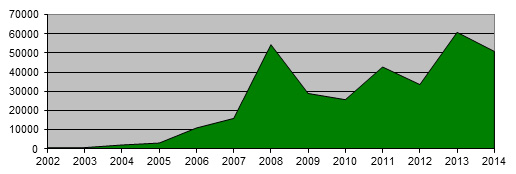
The downside of these experiments is that sometimes you’re going to fail hard. But you’ll also learn from them. 4. Take risks. Avoid the “safe” stories. Write what scares you. Write what you’re passionate about. Write what you love. Rip open your heart and smear it all over the page. Heck, Goblin Quest might be humorous fantasy fluff, but I love that little goblin, and I’ve got an awful lot of empathy for the runt who gets tormented by the crowd. The story meant a lot to me, and I think that strengthened the book. 5. Other suggestions include reading widely, hanging out with other authors (for the energy, if nothing else), and remembering to think of it as a marathon, not a sprint. It can take ten years or more to sell that first novel. Be patient with yourself. I hope this is helpful, and folks are more than welcome to chime in with other ideas and suggestions. I was feeling a bit … let’s call it “feisty” … at some of the panels this weekend. I found myself jumping in to argue with several of my fellow panelists. (But only when they were wrong, of course!) During the humor panel, it was put forth as a truism that you can’t force humor. It must come naturally. Organically. I would like to point out that passing a kidney stone is also an organic process. So I got feisty. Because you can force humor and make it work. You know who does it all the time? Professional humorists. Howard Tayler (of Schlock Mercenary) was in the audience, and we chatted a bit after the panel. Ack. Very Bad Image. Strike that. The point is, I guarantee there are days Howard doesn’t feel funny, and doesn’t want to work on the comic. But he does the work anyway. As I write this post, it also occurs to me that of the panelist who said you can’t force funny and Howard in the audience who in fact does exactly that, only one of these two people currently makes a living from their humor. I’m not trying to bash my fellow panelist here. I disagree with them, but I understand where their assumption comes from. Because while you can force humor, that humor will fail if it feels forced. We’ve all seen the guy who tries too hard to tell a joke and ends up flopping. Heck, I’ve been that guy more times than I like to think about. One sign of skill is the ability to make it look easy. I watched Jef Mallett draw his character Frazz last month. He sketched a bit, then began inking lines, making it look so easy and natural I’m sure a lot of us were thinking, “Hey, I could do that!” And maybe I could. With years of practice and work. Ask a professional comedian how many times they’ve practiced their routine. Ask them how often they bounce jokes past other comedians to learn what to keep, what to change, and what to discard. I think this one pushed my buttons so hard because not only do I disagree, but I’ve heard similar claims about writing. “You can’t force the writing to come.” “The story has to flow naturally, when the muse is ready.” Well, my muse is ready every Monday through Friday at 12:00 sharp, because that’s the only time I’ve got. Some days I don’t feel like writing, but I force myself to do it. As a result, I’ve written at least one book a year for close to a decade now. And you know, there are some damn funny bits in those books, too. In late 2000, I was looking at two job possibilities. One was computer support for a private company. The other was an equivalent position with state government, which paid about $15K less each year. On the other hand, the state job would have very little overtime (leaving more time and energy for writing), and it was a unionized position, meaning I would get a one hour lunch break pretty much every day. In February of 2001, I accepted a job as a government employee here in Michigan. It was a deliberate choice to give up that higher salary in order to take a job better suited to my goals as a writer. That choice was a turning point for me, and it meant I had to decide whether I was truly serious about this writing thing. Taking this job was a risk. There was no guarantee I’d succeed as an author. But it turned out to be the right choice for me. It’s not the most satisfying or fulfilling position, but it allows me to support my family and do what I love. Ten years later, I have six books in print with a major publisher, with a seventh on the way and two more under contract. I’ve sold forty-plus short stories. I’ve gone through three departments and four managers at work, but I’m still writing almost every day from noon to one o’clock, churning out a book a year and a few short stories. Writing is a marathon, and very much about long-term persistence. But there are turning points and milestones too, and it’s strange to realize it’s been ten years since I made that choice. I talk about writing and the day job a bit more in an interview at the Booklife blog. There are an awful lot of myths and misconceptions about writing, and one of the biggest is that writers are all rich, hanging out in their mansions and sipping champagne and role-playing with dice made from etched diamond. So for the past few years, I’ve been posting my writing income and expenses to provide what I hope is a more useful data point. Posts from previous years are here: 2007, 2008, 2009. I ended 2010 with a last-minute check from my agent for the French on-signing advance for Red Hood’s Revenge. With that added to the total, I made $25,718 in writing income in 2010, down about $3000 from the previous year. Here’s the graph going back as far as I have data for:
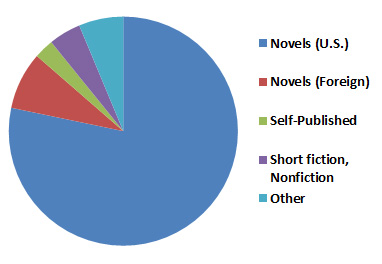
2008 was a fluke. A nice fluke, but a fluke nonetheless, with a big spike due to the success of the goblin books in Germany. The princess books haven’t been as popular, and I think the ongoing decline of that particular income stream is part of the reason for the drop from 2009 to 2010. But let’s break down the 2010 numbers a little further: Novels (U.S. Sales): $9297 I still make the majority of my income through foreign sales (Thank you, Joshua!), but the balance shifted a bit this year. Foreign sales were a smaller percentage of the overall income, with the money from DAW here in the U.S. climbing a bit higher. I have no idea what this means for the long term, but it’s interesting. That foreign income includes novel sales to France, Germany, and the Czech Republic, along with royalties from Germany and Poland. In general, individual foreign sales tends to be less than their equivalent U.S. deals … but those foreign sales add up. Expenses were about $2000, with more than half of that going into conventions. Of course, this is all before taxes. I have a higher deduction at the day job, which balances out a lot of the self-employment taxes I owe for the writing, but even so the numbers here don’t exactly represent the amount I put in my pocket at the end of the day. So that’s 2010. A pretty good year, and I’m expecting 2011 to be even better, at least with the U.S. income stream. No clue what to expect with the overseas sales. And to answer a commonly asked question, no I am not planning to quit the day job any time soon. Questions and comments are very much welcome, as always. Over at Making Light, James MacDonald explains How to Get Published. Before I go any further, let me state for the record that MacDonald knows his stuff. He contributes good writing advice at Making Light, Absolute Write, and elsewhere. That said, I’m gonna argue with a few of his points now, ’cause what fun would it be if we all agreed with each other? To be a writer, you must write. Absolutely, 100%, yes! However, MacDonald goes on to give the oft-repeated advice, “Write every day.” Good advice, but not an iron-clad rule. I write five days a week, but generally don’t write on weekends. I believe writing every day is a good goal, but ultimately, it’s important to find the schedule that works for you. The important thing is that you’re writing. On the day you reach THE END, put the book aside for six weeks. Let me put it this way: I wrote, revised, and started submitting Goblin Quest [B&N | Mysterious Galaxy | Amazon] over the course of six weeks, and that seems to have worked out pretty well for me. Distance can be a very good thing, and these days I usually try to do a short story or something else between drafts/books as a palate-cleanser. But once again, writing is like the Matrix: some “rules” can be bent, while others can be broken.1 Now find a publisher. This is exactly what I did when I finished Goblin Quest, actually. It’s not the path I’d follow if I had to do it all over again today. Publishers are slow to respond (2.5 years in one case), and they ask for exclusivity. Personally, I would go directly to querying agents, and let them submit to the publishers. Authors have sold books both ways, as you can see in that First Book Survey someone did earlier this year. I remember being a new author trying to break in, and assuming that Advice = Law. If a pro said I had to sell short stories before selling a novel, then by Asimov’s Sideburns, that was what I must do! It messed me up more than once. So while I think it’s incredibly important to listen to authors who have this sort of knowledge and experience, it’s also important to remember that none of us have the Gospel of Getting Published. (And I don’t believe MacDonald is trying to preach Publishing Gospel, but I know how easy it is for new writers to take things as such.) That said, MacDonald gives some good advice, and those working to break in could do much worse than to take a few minutes to read his post. —
As folks know, I just landed a two-book deal. On top of this, I’ve got two short stories to write, and I’ve got my revision notes from my editor on Snow Queen’s Shadow. So how is the writing going? Here’s a peek into Jim’s brain… STUPID STORY! If you don’t stop screwing around and give me an actual plot, I’m going to punch you so hard your font goes sans serif! I’ll set your clock back to pain o’clock! Keep it up, and I’m carving roast plotbunny for Thanksgiving dinner. That’s right, welcome to McAsskicking — would you like to supersize your order? Thus endeth the writing update. Here, have a LEGO Stitch to keep you busy. This is by Sir Nadroj. Click the pic for more. So I’m working on book four of a series, and I’m struggling with is how to provide all of the background information. I’ve now got 300,000 words worth of “what came before.” Not all of that information is relevant to the current book, but some of it is. So how do you work that in? There’s the “Our story so far…” approach, where the author presents a prologue that sums up the previous books. I can see where that might be useful in an ongoing story, like book four of Lord of the Rings or part two of a Star Trek episode. But personally, I’m not too fond of the Prologue of Summarized Backstory, and my books are a bit more episodic, meaning I don’t think there’s a need to sum up everything that’s come before. With the goblin books, I went for the silly. Book two had a song to the tune of Sweet Home Alabama, which summed up the events of Goblin Quest. Book three opened with “The Recitation of the Deeds of Jig Dragonslayer,” a quasi-religious goblin-style list of events. That doesn’t really work for the princess series, which doesn’t have the same kind of goofy humor. So I’ve been taking the approach that I’ll just write the story and include background info when and if it becomes important, just as I would with any other information. Even with a brand new story, there’s always “what came before,” and the author has to work that in. But how much do I have to tell? Do I assume most everyone has read the first books, and I don’t have to explain — again — where Danielle’s sword came from, or what happened to Charlotte, or who Captain Hephyra is? Or do I assume there will be new readers which each book, meaning it’s important to add a paragraph or two to explain various details to the new readers … even though people who’ve read the rest of the series might roll their eyes and say, “I know this already. Get to the good part!” The latter is a complaint I’ve seen in a few reviews lately. Not a major criticism, but a minor annoyance, especially for people who picked up all three books and read them at once. I don’t know. It’s important to me that the books stand alone as much as possible, so that anyone can pick up any of my books and start reading. For that reason, I’m thinking it’s important to include some explanation for things from prior books that come up in this one. Maybe the trick is to find a new way to present the same old information, so that even people who know the background will be entertained, or at least not bored. Or maybe I shouldn’t worry about explaining, trusting that those gaps won’t throw new readers out of the story. That they’ll either figure it out from context, or if they’re worried, that they’ll go back and get the earlier books. What do you think? Examples, both good and bad, are more than welcome. One of the frustrating things about being a new writer is that you get different advice depending on who you ask. I remember my confusion that the wisdom of Big Name Pros, the people who had been doing this for decades, was sometimes completely off-base. But it makes sense — publishing is a changing field, and some of the rules of 20 years ago are different from the rules today. Imagine my shock when it occurred to me that I started writing 15 years ago … that my own experiences were different than those of new writers today. (Not to mention the fact that many of my fans hadn’t even been born when I started writing. Eep!) I sat down to take a look at some of the things that have changed since I penned my first story in 1995. 1. Electronic submissions. All of my early stories were printed and mailed. I went through boxes and boxes of manila envelopes. Submitting by that new-fangled electronic mail? Unheard of. International submissions were sent with an IRC (International Reply Coupon). 2. Electronic markets. There were few online ‘zines and publishers, and those that did exist were small and often amateurish. (Strange Horizons showed up in 2000, and was the first professional-looking online ‘zine I knew of. Happy 10th Anniversary, SH!) 3. Web sites. A web presence wasn’t required, though some of us were experimenting with pages and online journals. I put up my own page on that fancy new Geocities site. 4. Submission guidelines advised you to always use a fresh ink ribbon in your printer.
6. E-books. Wait, e-what now? 7. Standard Manuscript Format was 12-point Courier. Two spaces after periods. Underline to show italics. Does anyone even use Courier anymore, or is it hanging out with other forgotten fonts, drinking and talking about the good old days? 8. I could walk into a bookstore and introduce myself as an author, and the staff wouldn’t instinctively flinch or hide. (Also see: Vanity presses, explosion of.) 9. SFWA pro rate for short fiction was 3 cents/word. 10. My hair came down to the middle of my back. (I maintain that the hair loss is writing-related, caused by stress!) 11. There were agents charging a 10% commission. I’m not sure exactly when the switch to 15% happened, but pretty much every agent is working for 15% these days. 12. People were bemoaning the Imminent Death of Publishing, as opposed to the present day, when … um … never mind. Strange to realize that even though my first book with DAW came out a mere four years ago, much of my experience as a new writer trying to break in is already a bit outdated. And if that’s true, imagine what it’s like for someone who broke in even further back. I’m not saying you shouldn’t listen to professional authors who talk about this stuff. However, it’s good to be aware that publishing is constantly changing, and some advice from ten years ago might not hold today. It’s also good to pay attention to whether the author giving the advice is aware of and in touch with those changes. So what’s changed since you started writing? Contributions to the list are welcome (as are regular old comments and discussion). |
||
|
Copyright © 2012 Jim C. Hines - All Rights Reserved |
||