“Releasing doves at a wedding is supposed to be a sign of prosperity. Tell me, princess, what does it portend when the doves try to eat the guests?”

-Charlotte Moors
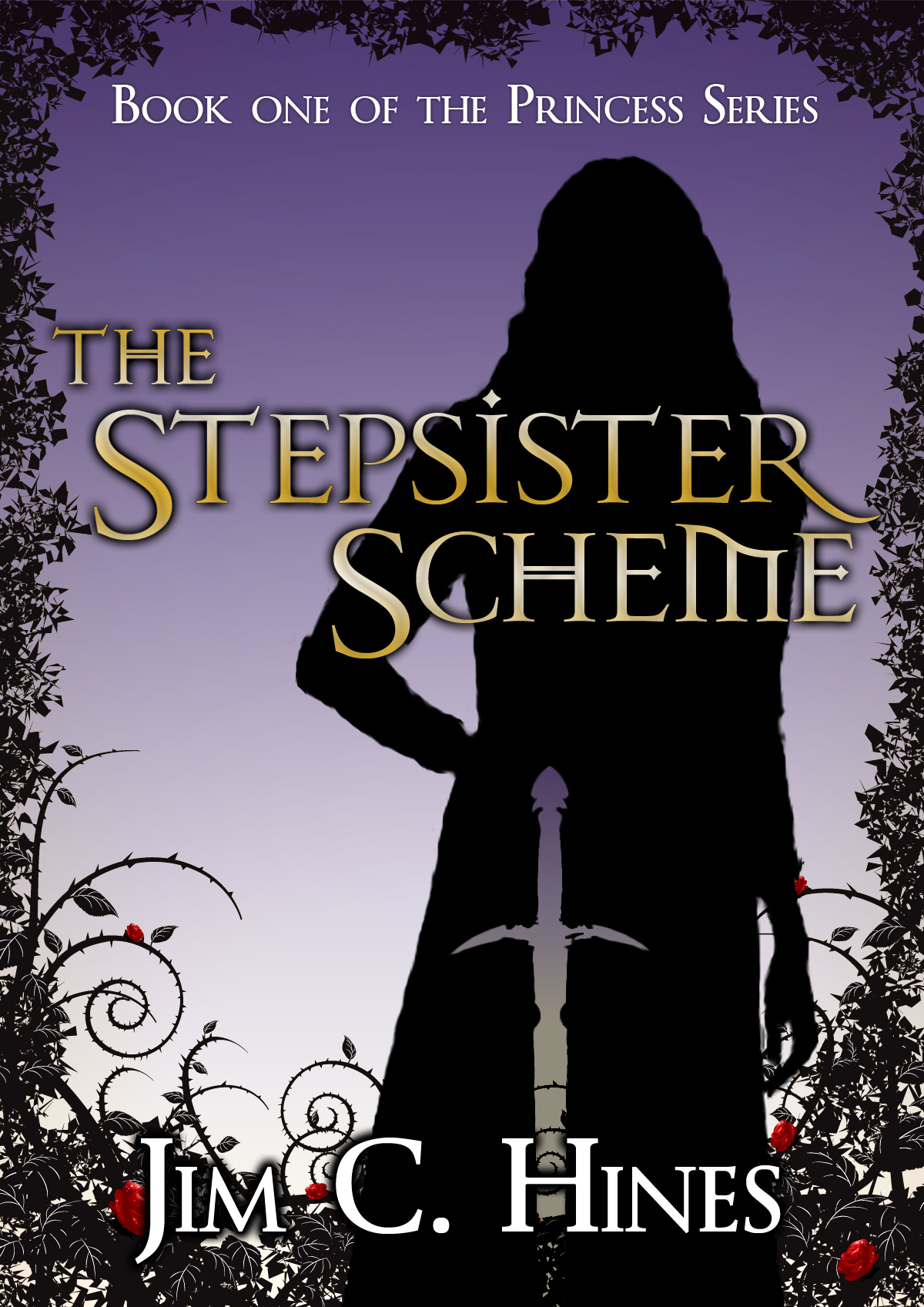
The Stepsister Scheme

Free Fiction

Site Translation from Google

English flagGerman flagFrench flagSpanish flagRussian flagCzech flagDanish flagPolish flag                                  
By N2H

Previously, on Princess Trek…

So I’m working on book four of a series, and I’m struggling with is how to provide all of the background information.  I’ve now got 300,000 words worth of “what came before.”  Not all of that information is relevant to the current book, but some of it is.  So how do you work that in?

There’s the “Our story so far…” approach, where the author presents a prologue that sums up the previous books.  I can see where that might be useful in an ongoing story, like book four of Lord of the Rings or part two of a Star Trek episode.

But personally, I’m not too fond of the Prologue of Summarized Backstory, and my books are a bit more episodic, meaning I don’t think there’s a need to sum up everything that’s come before.

With the goblin books, I went for the silly.  Book two had a song to the tune of Sweet Home Alabama, which summed up the events of Goblin Quest.  Book three opened with “The Recitation of the Deeds of Jig Dragonslayer,” a quasi-religious goblin-style list of events.

That doesn’t really work for the princess series, which doesn’t have the same kind of goofy humor.  So I’ve been taking the approach that I’ll just write the story and include background info when and if it becomes important, just as I would with any other information.  Even with a brand new story, there’s always “what came before,” and the author has to work that in.

But how much do I have to tell?  Do I assume most everyone has read the first books, and I don’t have to explain — again — where Danielle’s sword came from, or what happened to Charlotte, or who Captain Hephyra is?  Or do I assume there will be new readers which each book, meaning it’s important to add a paragraph or two to explain various details to the new readers … even though people who’ve read the rest of the series might roll their eyes and say, “I know this already.  Get to the good part!”

The latter is a complaint I’ve seen in a few reviews lately.  Not a major criticism, but a minor annoyance, especially for people who picked up all three books and read them at once.

I don’t know.  It’s important to me that the books stand alone as much as possible, so that anyone can pick up any of my books and start reading.  For that reason, I’m thinking it’s important to include some explanation for things from prior books that come up in this one.

Maybe the trick is to find a new way to present the same old information, so that even people who know the background will be entertained, or at least not bored.  Or maybe I shouldn’t worry about explaining, trusting that those gaps won’t throw new readers out of the story.  That they’ll either figure it out from context, or if they’re worried, that they’ll go back and get the earlier books.

What do you think?  Examples, both good and bad, are more than welcome.

Endings

Assuming nobody interrupts my lunch break today, I should be able to finish up the third draft of The Snow Queen’s Shadow.  Not the final draft, mind you.  I’ve made plenty of notes about things I have to go back and fix.  But I’m hopeful that draft #4 will be the one that gets sent to my agent and editor.

This is the second time I’ve wrapped up a series.  You’d think it should get easier.  Much like each new book you write should be easier than the last, because you’re getting better, right?  Yet it seems to work the other way around.  The more skilled you become as a writer, the more ambitious you get, and the more aware you are of the flaws.

From the start, endings and the lie of happily ever after have been a central theme of the princess series.  I’m not saying people can’t be happy, but the idea of endings … unless you destroy the universe on the last page of your book, there is no end.  There’s only the point where you stopped writing.

Usually that point should bring closure to the conflicts of the book.  But if everything is wrapped up too neatly, it ruins the suspension of disbelief, at least for me.  Life is messy.  Solving one problem often leads to others.  So when I end a book or a series, I want to make sure I convey a sense that these characters and their stories will continue — even if I’m no longer writing them.

I also look for change.  If everyone and everything is the same at the end as they were in the beginning, what’s the point?  Sure, the journey might have been fun, but a story where the status quo never changes?  No thank you.

And of course, the author has to follow through on his/her promises.  For example, I introduced an unresolved romantic relationship in Stepsister Scheme.  I have to go somewhere with that tension.  Likewise, there are other character conflicts I’ve been planting and need to resolve … one way or another.

I don’t believe an author’s job is to make all the readers happy.  In part because there’s just no way to do it.  I know some readers really want to see those two characters end up together; other readers have said they don’t want that.  One way or another, some people will not get the ending they were hoping for.

For the past year, I’ve been searching for the ending that feels true.  Some things have changed a lot from my initial outline; others haven’t.  Some plotlines I had hoped to include were cut because they just didn’t fit.  And don’t get me started on trying to decide who lives and who dies…

I’ve got a lot of work left, but I’m getting there.  For the most part, this ending feels right.  It feels honest.  It answers questions … but not all of them :-)  It provides closure, but also points toward a future (and leaves me something to work with if I someday decide to return to this series).  It is — I hope — powerful without being manipulative.1

Is it perfect?  Probably not.  But I’m proud of what I’ve written, and I can’t wait to share it with everyone.

Discussion welcome, as always.  What do you look for in an ending?  What are the best (or worst) endings you’ve read?  What makes it work?2

  1. Deus ex machina endings fall into the manipulative category for me, as do most “It was all a dream” endings.
  2. Also, see Aliette de Bodard’s SF Novelists post on cultural expectations of what makes a good ending and a good story in general.

Updated Fanfic Policy

The Snow Queen’s Shadow, draft 2.0, is done!  There’s a lot of work to do for draft 3.0, but I have a pretty good idea what the biggest problem is with this draft, and how to fix it.  (At one point, I thought I had everything worked out and I might actually be able to wrap this book up with only two drafts.  Such a pleasant little delusion…)

#

I was talking to a friend the other day about my last fanfic post (MZB vs. fanfic), and commented that it’s not the actual fanfic stories that intrigue me.  What fascinates me is fanfic as a phenomenon.  The fact that there are communities out there devoted to fanfic, that it’s an entire culture.

It’s equally fascinating to see how passionately some profic authors react to fanfiction.1  Some strongly support and encourage fanfic authors, while others view fanfic as the BP of the literary world, spewing toxic crap all over their beautiful works.  The anti-fanfic arguments I’ve seen generally fall into several categories.

1. Fanfic is badly written.  Forgive my bluntness, but this is a stupid argument.  Sure, a lot of fanfic is bad.  A lot of anything is bad.  With professionally published fiction, you have editors and agents screening out the worst of it, but I’ve still read plenty of published crap.  With fanfic, while there are some quality controls in place, I don’t believe there’s as strong of a gatekeeper effect … but so what?  If it’s bad, don’t read it.

2. The legal problems.  I’m not going to rehash the MZB case, but while the facts found were incomplete, I don’t see where the existence of fanfiction poses a legal danger to me as a commercial author.

3. They should write their own characters/worlds.  I.e., anyone wanting to be a “real” author should work on original fiction.  Okay, I can buy that writing original fiction is the best practice for writing original fiction, just as the best practice for writing novels is to write novels.  But why assume everyone wants to be a commercially published author like me, that fanfic exists only as the means to some other end?

4. They’re miswriting/changing/warping my characters/worlds.  Believe it or not, I kind of understand this one.  I came across fanfic from my goblin series a while back, and my gut response was that they were writing the characters wrong.  In my opinion, the dialogue and the actions were not in character … but again, so what?  I don’t have to read it.  And even if the characters in that story are fundamentally changed from what I wrote, how does this hurt me?

It’s that last question that finally made me decide to change my policy on fanfiction.  Because I can’t think of a single way fanfic hurts me as an author.  And I can think of ways in which it helps.  I’ve seen first hand as fans found my princess series, got excited about the fanfic potential, and handsold the book to their friends.

If someone convinces me fanfic can harm me as an author, or that I’m better off disallowing it, I reserve the right to change my mind.  But for now, I’m updating my fanfic policy to the equivalent of Don’t Ask, Don’t Tell.  Please don’t ask me to read it or tell me about it, but beyond that, so long as you’re not trying to sell it, have fun!

  1. Profic is the correct term, yes?

Almost there! Stay on target…

I’m so close to wrapping up the second draft of The Snow Queen’s Shadow … meaning my brain has little room for anything except getting through these final few scenes.  It took a supreme act of willpower to not call in sick today so I could finish.

There’s still a lot of work left to do on this thing.  Basically, I need to splice in another full plotline and do a lot more worldbuilding.  I’m also trying to make sure I include closure for plot threads from the entire series, not just from this book.

This is the second series I’ve finished.  I’m proud of how I wrapped things up with Goblin War, but the the princess series is a little more complex.  Not to mention having three times the protagonists.  But I’m feeling fairly confident.  The book isn’t there yet, but I have an idea what I need to do to get it there.

So while I obsess over trying to write the perfect ending, enjoy this functional LEGO sniper rifle, built by Jack Streat.  I’d probably want to double the rubber bands to get better range, but still — this thing has a working clip, tripod, and scope, and appears to be pretty darn accurate for a LEGO rifle.  (Thanks to Steven Saus for the link.)

State of the Author

Want a peek into the wackiness of author brain? Okay, first of all, here are the things I’m working on right now:

  • The Snow Queen’s Shadow — 42,000 words into the second draft
  • Synopses for three books in a new series — I have some rough ideas for book one, and tentative titles for all three
  • Article for the SFWA Handbook — need to review and finalize that one

Compared to many of my author friends, it’s a modest list.  But it’s enough to keep me busy.  Now guess which one of these projects my brain is stuck on.  Go ahead, guess.

What I really want to work on right now … is a fake book review blog, authored by the protagonist of the unsold new series.

::Headdesk::

That’s right, my brain is stuck on the idea of posting extra “goodies” material for a character from a series that 1. I haven’t sold yet and 2. won’t appear until at least 2012 even when and if I do.  It would be one thing if I was obsessing over the synopses, which I could at least get to my agent so we could try to sell the silly thing.  But the protagonist’s blog?  Really, brain?  (I have the coolest title for the blog, too!)

I’ve also been obsessing about progress on Snow Queen.  When we negotiated the contract, I asked for 14 months to write this one, which means my deadline isn’t until October 1.  But I look back and realize I’ve been working on this book for eight months, and I’m a long, long way from being done.  Given that I usually do three or four complete drafts, am I going to have time to get this one right?  I’m wrapping up a series — this book has to be as good as I can make it.

It’s helped somewhat to remind myself that this is normal.  I looked through last year’s blog posts and realized I didn’t even finish the first draft of Red Hood’s Revenge [B&N | Mysterious Galaxy | Amazon] until March 23.  I finished draft two on June 8.  I still rewrote it again and turned everything in by August 15, and even though I got frustrated and discouraged at times, I think Red Hood ended up being a damn good book.

It doesn’t make the stress go away.  It doesn’t erase the fear that maybe this book won’t be as good as the last one, or that maybe I’m not a good enough writer to tell this story.  But it does help to recognize that I’ve been here before.  This is an unpleasant place to be, but it’s familiar, and I know I’ve gotten through it.  Which suggests I can probably get through it again.

Even if I’d rather be doing site design for a book review blog.

Friday Roundup

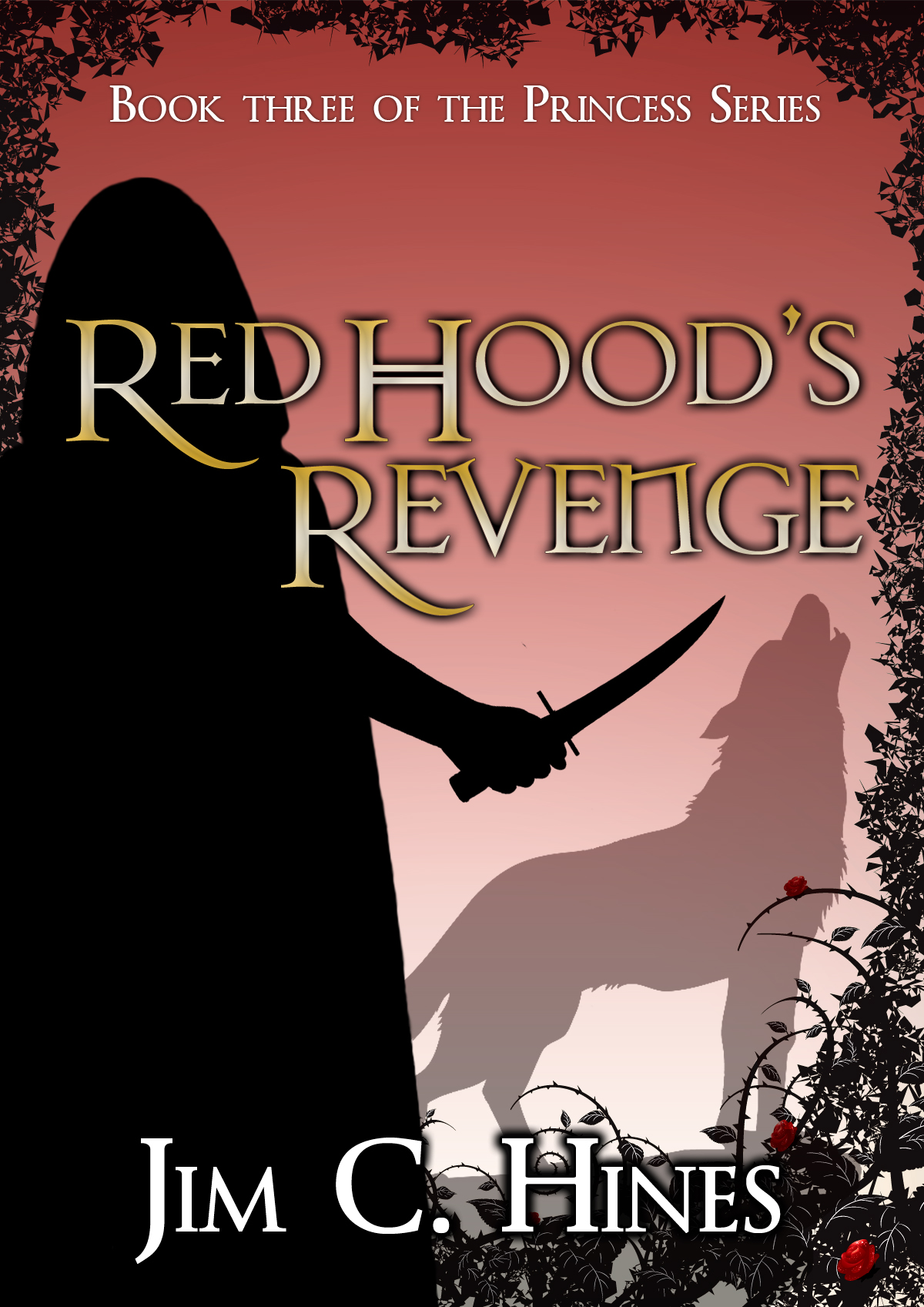
I posted yesterday that I didn’t know when I’d be able to share the cover art for Red Hood’s Revenge [B&N | Mysterious Galaxy | Amazon].  The answer, apparently, was “very, very soon.”  I spotted the cover at B&N, then received a cleaner copy from DAW.  Click the thumbnail for a larger version.

As noted before, we had to switch artists in mid-series.  This was done by Mel Grant (who also did my goblin covers).  The cover for Mermaid remains my favorite, but I think he did a great job making sure it was recognizable and consistent with the earlier books.

#

I also asked yesterday whether an anime-style Snoopy fighting cat ninjas would be awesome or terrifying.  socchan took up the challenge, and the answer is: Awesome!!!

#

Page proofs for Red Hood have also arrived.  I know how I’ll be spending my evenings for the next few weeks.  (But this means I should be able to post a sample chapter from the book soon!)

#

Thank you to everyone who suggested titles for book four.  After talking to my editor, the final title will be:

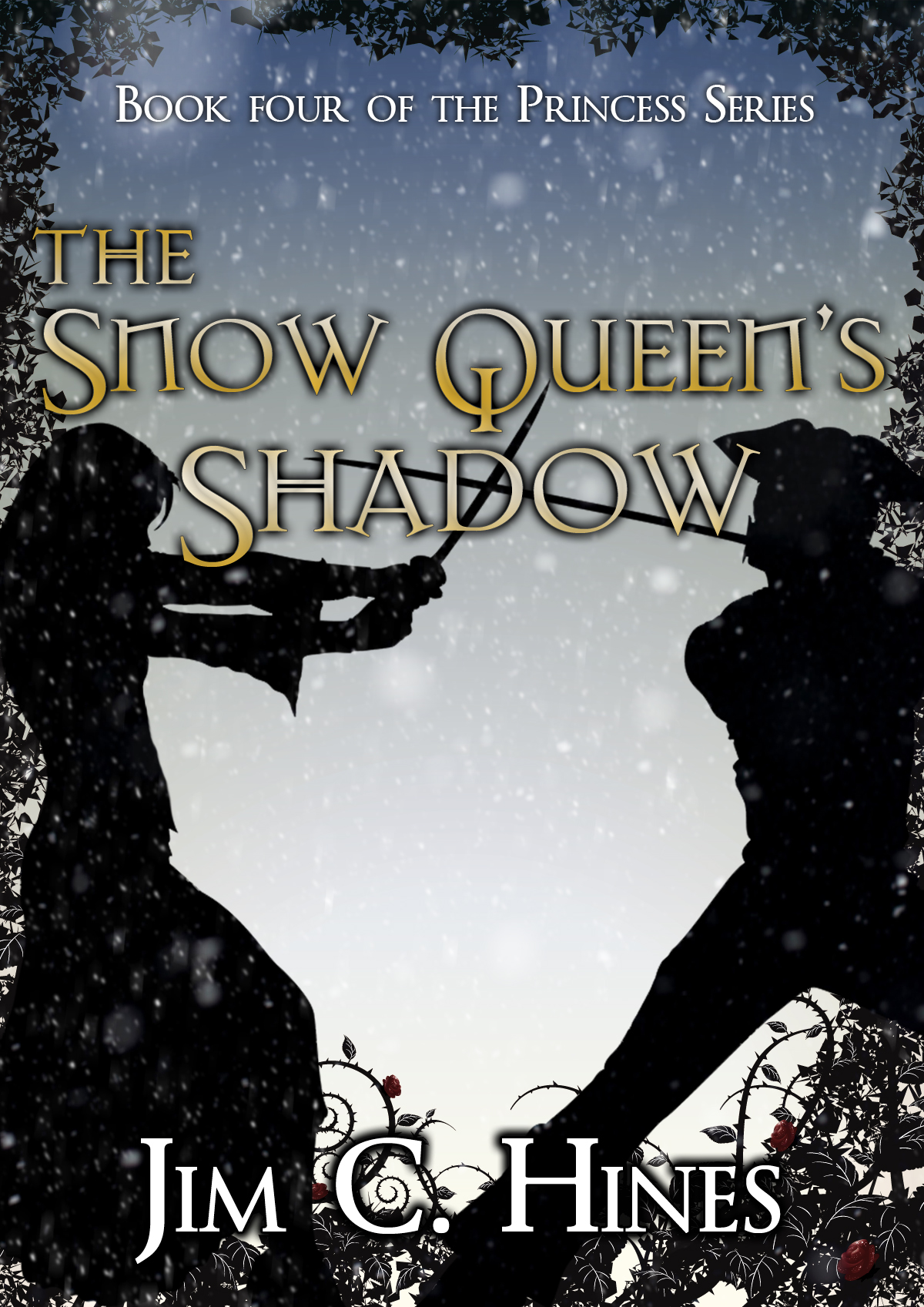
The Snow Queen’s Shadow

The Snow Queen’s Snare was a close runner-up, but didn’t quite fit the plot as well.  Shadow was suggested almost simultaneously by two users on LJ and my jimchines.com blog, so I’ve decided to name them both winners.  Congrats to miladygrey and Sewicked.  I’ll be e-mailing you about your prizes!

#

Finally, because I haven’t done one in a little while, a LEGO piano by catarino.  I used to play piano, and I love the detail on this thing.  Check this closeup of the keys, or just click the image below for more shots of the piano and catarino’s other work.

Sunday Roundup

1. At 10:00 p.m. last night, I typed “THE END” on the first draft of Snow Queen.  First draft is done!!!  So, time to start reading and marking things up for rewrite #1.

2. HUGE thanks to everyone who suggested titles for Snow Queen.  You had some wonderful ideas, and I’ve e-mailed my top picks as well as a few crowd favorites to my editor.  I’ll let you know what I hear back.

3. Catherine Shaffer believes I should be smothered with a pillow in my sleep for writing “The Creature in Your Neighborhood.”

4. The CEO of Macmillan explains their side of the Amazon incident:

“This past Thursday I met with Amazon in Seattle. I gave them our proposal for new terms of sale for e books under the agency model which will become effective in early March. In addition, I told them they could stay with their old terms of sale, but that this would involve extensive and deep windowing of titles. By the time I arrived back in New York late yesterday afternoon they informed me that they were taking all our books off the Kindle site, and off Amazon.”

4b. Charlie Stross and Tobias Buckell offer two good essays on Amazon’s move.

4c. I don’t think I could offer anything more articulate than what’s already out there.  But I did want to point out that my previous post has already generated one angry comment which reads, “will not be buy macmillan books. it is ridiculous to pay such a big price for virtual books. will look for other authors.”

Brilliant.  Let’s punish the authors for something they have zero control over.  But it’s a good reminder that most people are pretty ignorant about how the business works, and a lot of those people are going to see Amazon as some sort of hero standing up for cheap e-books.

4d.  I was happy to find a short YouTube clip which I feel better captures Amazon’s attitude toward these negotiations.  This is my first-ever attempt at embedding a YouTube clip, so my apologies if I mess it up.

Search for the Snow Queen’s Title

Following up on yesterday’s post, for anyone interested in publishing industry numbers, one of my readers provided a link to Bowker’s 2009 industry statistics.  This doesn’t provide numbers sold, but does show the number of new books in various categories.  Worth a look, for anyone interested in this stuff.

#

So the princess series is going to be four books long.  Three of these books have titles:

The Stepsister Scheme [Amazon | Mysterious Galaxy]
The Mermaid’s Madness
[Amazon | Mysterious Galaxy]
Red Hood’s Revenge [Amazon | Mysterious Galaxy]

Book four doesn’t have a final title, and I’m almost out of time.  We’re doing page proofs on Red Hood soon, and I want to make sure it includes information number four.

So I’m turning to y’all for help.  The final book is based on the Hans Christian Anderson fairy tale The Snow Queen, as most of you already know.  I need a title that will fit with the rest of the series, and will be so exciting, so vivid, that everyone is helpless to resist its allure.

At the moment, the tentative title is Spell of the Snow Queen.  It works, but my editor and I would love to find something that had a little more zing.  Rejected titles include:

Shards of the Snow Queen
Scourge of the Snow Queen
The Snow Queen’s Secret
Snow Queen and the Half-Blood Princess
The Snow Queen and the Terrible, Horrible, No Good, Very Bad Day
The Snow Queen would make an awesome movie!  Are you listening, Peter Jackson?  E-mail me!
iSnow: Apple’s Revenge
Godzilla vs. Snow Queen

All suggestions are welcome.  If we end up using yours, you’ll receive an autographed book and a shout-out in the acknowledgements.

Wednesday Updatezzz…

Last night did not go quite as planned, in that I didn’t plan to bring my wife to the emergency room at 11:30, or to stay there waiting for doctors and lab results until 5:30 in the morning.  She’s fine (aside from bruises after five attempts to draw blood) — this was a scare that thankfully started to pass after the third hour of sitting and waiting in the E.R.  But neither one of us are what I’d call fully functional this morning.

So today we do random updates, ’cause it’s what my brain can handle.

Snow Queen is on schedule.  I’m still planning to have the first draft finished by the end of the month.  And I had a happy-dance moment last night where more pieces of the ending fell into place.  I love it when that happens!

Conventions — I’ll be at ConFusion later this month (1/22 - 1/24), doing what looks like seven panels and an autographing session all on Saturday.  (Including a fairy tale panel with Cat Valente and Peter Beagle — eep!)  I’ve also committed to doing Millennicon in March.

Diana Pharaoh Francis is planning to kill me, and it’s AWESOME!  Click over and read the excerpt from her work in progress, Crimson Wind.

And … um … yeah.  That’s what I’ve got.  Sleep now?

Updatery

• First off, a quote from author C. C. Finlay: “The third law of writing: For every fiction there is an equal and opposite re-fiction. For example, if there is The Hobbit, eventually someone will inevitably write Goblin Quest.”  I am much amused.

• The SF/F Humor Roundup is up to 22 short stories and 12 novels.  So far, so good!  I’m working on guidelines to try to cut down on blatant self-promotion.  I don’t mind authors recommending their own work, but I don’t want a list of 30 stories from every online nook and cranny.  I’m thinking of limiting self-promotional recommendations to one short story and/or one novel.  What do you think?

• I’ll be heading to Windycon tomorrow.  I’ve got the Manly Baen vs. Womanly DAW panel Saturday at 10, an autographing session Saturday at 2, What are Kids Reading on Sunday at 10, and I’ll be reading my muppet werewolf tale on Sunday at Noon.  Hope to see some of you there!

#

I realized I haven’t done an actual writing update in a while.  After finishing the revisions for Red Hood’s Revenge, I started back in on Snow Queen.  I struggled through the current chapter, but it was painful.  The whole thing felt like it was stuck, and I had no idea where to go from here.

Some of the more experienced writers probably know exactly where I’m at in this manuscript.  That’s right, it’s the dreaded 30,000 word slog.  Every book I’ve done for the past five years has hit this same point, where my outline falls apart and the story crashes and burns.

Fortunately, I’ve done this enough times to recognize it.  The solution for me?  Step back and rewrite the outline.  When I’m first planning a book, my brain can’t hold the whole thing.  So I outline and do the best I can, but by the time I’ve typed 25K-30K words, I’ve changed enough that the outline no longer works.

I’ve spent the past week outlining, and I’m just about ready to dive back in.  I’m not going to start over from the beginning, because I’ve found that just wastes time for me.  But I’ve made notes about what to change in the rewrite, and more importantly, I’m excited about some of the new ideas and directions I’m taking in the rest of the story.  I’m also surprised to realize I don’t know how this book is going to end.  I honestly don’t know whether or not certain characters will survive.  That’s kind of fun :-)

So there’s where I’m at with the writing.  Book three is done, book four is underway, and the back of my brain is quietly percolating ideas for the next series.