

Shades of Milk and Honey, by Mary Robinette Kowal
 I will be totally, absolutely honest with you here. I wasn’t really expecting to like Mary Robinette Kowal‘s Shades of Milk and Honey [Amazon | B&N | Mysterious Galaxy].
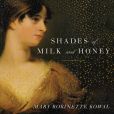
It’s nothing to do with Kowal or her writing. I’ve adored other things I’ve read by her. I’ve nominated and voted for some of her work for various awards. She’s a good writer. But this one just didn’t look or sound like my kind of book. The description, “Like Jane Austen wrote a fantasy novel” didn’t hit any of my buttons, and I’m afraid the cover art didn’t help. (The newer editions of this series have different and much improved artwork, in my opinion.)
I tend to prefer more action in my plots, more humor and fun in my fiction … which I’m sure comes as a tremendous shock to anyone who’s read my stuff. So it took me a while to pull this one off of Mount ToBeRead…
…at which point I devoured the story, finishing the book in three days, and sacrificing a bit of sleep in the process.
Here’s the publisher’s description:
…an intimate portrait of Jane Ellsworth, a woman ahead of her time in a world where the manipulation of glamour is considered an essential skill for a lady of quality. But despite the prevalence of magic in everyday life, other aspects of Dorchester’s society are not that different: Jane and her sister Melody’s lives still revolve around vying for the attentions of eligible men.
Jane resists this fate, and rightly so: while her skill with glamour is remarkable, it is her sister who is fair of face, and therefore wins the lion’s share of the attention. At the ripe old age of twenty-eight, Jane has resigned herself to being invisible forever. But when her family’s honor is threatened, she finds that she must push her skills to the limit in order to set things right—and, in the process, accidentally wanders into a love story of her own.
There are a few action-type scenes toward the end, but for the most part, this is a relatively quiet book. And I loved it. I loved the characters. I loved the relationships between them, and the way Jane’s insecurities crashed into those of her sister, and the conflicts that ensued. I loved the language, which was careful and formal without ever feeling stilted or stuffy.
The magic was particularly enjoyable. In a genre that includes Gandalf and Dumbledore, the glamours of Kowal’s world are relatively limited in scope: the manipulation of light and sound to craft illusions. It’s seen as a lady’s skill, like painting watercolors or playing a musical instrument. But Jane is very skilled and passionate about her art, and it draws you in until a scene about crafting an illusory birch grove is as thrilling as any battle between heroes and goblins.
Certain elements and twists in the story felt a little predictable, but I wasn’t reading for the plot twists. I was reading for the sheer enjoyment. And I was kicking myself for not reading it sooner.
You can read the first two chapters at Kowal’s website, and I strongly encourage you to do so.


