Jim C. Hines
  • Blog
  • About
    • Press Kit
    • Cover Posing
    • Privacy and Other Disclaimers
  • Bookstore
    • Autographed Books
  • Bibliography
  • Appearances
  • Rape Resources
  • Contact
    • Speaking Engagements
  • Patreon
  • Facebook
  • Bluesky
  • Tumblr
  • Goodreads
  • Instagram
RSS
March 8, 2015 /

The Danger of the False Narrative – LaShawn Wanak

Welcome to the second round of guest posts about representation in SFF.

One of the common refrains in these conversations is, “If you want to see people like you in stories, why don’t you just write them yourself?” There are a number of problems with that statement, one of which author LaShawn Wanak talks about here. How do you create those stories when you’ve grown up being told people like you don’t belong in them?

Stories are powerful. Sometimes we don’t even realize how they’ve shaped our thinking…


Ever since I was a little kid, I’ve known I was a writer. My earliest memories were making up stories about my sisters and cousins. I told of secret tunnels under our neighborhood that took us to crystal-laden caverns. Or our dogs sprouting wings and bearing us off to a land where all animals could talk and fly.

When I was twelve, my grandmother got me a typewriter, and I began to write my stories. By then, I was trying to imitate all the books I read: Robert Silverberg, Anne McCaffrey, Katherine Kurtz, Stephen R. Donaldson, and of course C. S. Lewis. I stopped making up stories of my sisters and cousins, and added my own original characters.

Every single one was white.

It never entered my mind that black people like myself could exist in fantasy novels.

#

Back then, I thought blacks didn’t do epic fantasy. I only saw them confined to dramas dealing with drugs, gangs, prostitution, crime, slavery, segregation, or something dealing with race. If there were black people outside those genres, it was science fiction, like Octavia Butler or Samuel Delany (both of which I did not know about until I entered college). But epic fantasy? No such thing. The closest thing to it would be “magic realism” or stories involving voodoo, because that’s the only way blacks interacted with magic. No elves. No dragons. No swords or sorcery.

Heck, I myself was an anomaly. Growing up on the south side of Chicago, I was picked on by kids around me because I loved to read epic fantasy. Shonnie’s reading the weird books again. Why you reading that junk? It’s just make believe.

I didn’t know any other black kids who loved fantasy as much as I did, so I resigned myself to thinking that I was just that: a weirdo. I never questioned it.

It was a narrative I grew up with most of my life.

#
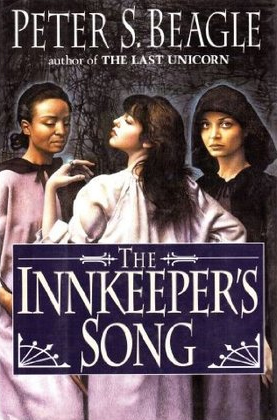
The Innkeeper's SongThis all changed when I came across Peter S. Beagle’s “The InnKeeper’s Song.” On the cover were three women: a pale woman, a tan woman…and a black woman. With hair. Like mine. I don’t think I even read the book right away. I just stared at the cover for a long time because look there’s a black woman on the cover of a fantasy novel.

When I finally I opened the book, I learned her name was Lal. She wasn’t a slave or a hooker. She didn’t have man troubles or drug problems. She was simply searching for her wizard teacher so she could save him, and the world, from destruction.

That book blew my mind. But it didn’t change it.

Not yet.

#

In college, I started writing an epic fantasy novel that had magic, prophesy, political intrigue–and one black female assassin. Although she was a main character, she was seen mostly through the eyes of the main white male character.

Then, I stumbled onto the LiveJournal community, right around the time of RaceFail, and found myself reading NK Jemisen’s essay, “We Worry About it Too“. Here was another black fantasy writer, telling of her struggles of writing people of color in fantasy, and how some things she got right, but others had fallen back on stereotypes that even she didn’t realize was there.

It challenged me enough to look at my unfinished novel and think, what if I told this story from the point of view of the black assassin?

Instantly, I became scared.

Because to write fantasy from a black perspective, I’d have to ignore the narrative that dictated to me for so long that black people don’t read epic fantasy. Black people don’t belong in epic fantasy. They can’t be in fantasy lands riding horses with swords and having adventures. They need to stay in cities and deal with gangs and drugs.

But this is a false narrative.

#

A few weeks ago I had the unfortunate pleasure of hearing a pastor say something problematic about black women. I was hurt and, of course, outraged. Didn’t he think before he said it? How could he say such a thing?

A few days after, I saw someone post on Facebook a tweet from a woman named “Luwanda” who wrote: “Yes u should get vaccines. And so what if that makes your kid artistic. That don’t always mean he’s gay.” Immediately I reposted it, because I thought it was so mind-blowingly ignorant and hilarious.

Then I actually looked up Luwanda’s Twitter feed. She’s a pretty savvy satirist who knew exactly what she was doing when she wrote that tweet. But I only saw the tweet (ghetto language), saw her name (ghetto name) and instantly thought she wasn’t someone to take seriously. It was a knee-jerk reaction—I’ve seen enough news stories, sitcoms, movies that portray the poor black ignorant woman that even though I know it’s a stereotype, there’s still a part of me that thinks it’s true.

And that needs to change.

#

I’m not good at speeches. I don’t like debating people. I’m pretty passive aggressive when it comes to conflict. But I can write stories. Fantasy stories. Epic fantasy stories about black people. Good black people. Bad black people. Magicians. Warriors. Adventurers. People.

The only way to overcome the false narrative is to change it.

Every short story, every novel, every poem, every blog post, can be used to counteract the stereotypes that we as a black people live with daily. And it’s hard, because there are so many naysayers, both from outside and within, who say you can’t do that.

But I know it’s not true, because there’s me, and there are so many other black authors of fantasy. N. K. Jemisen. Nnedi Okorafor. Alaya Dawn Johnson. The more stories people read of us, the more the narrative changes into one that reflects truth:

that we are many, diverse, widespread and utterly,

utterly,

normal.


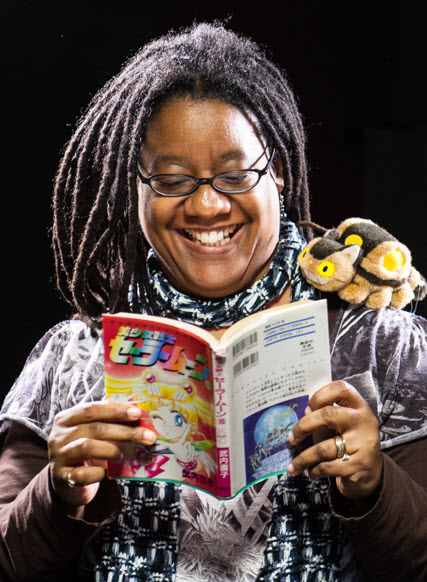
LaShawn M. Wanak‘s work can be found in Strange Horizons, Ideomancer, and Daily Science Fiction. She is a 2011 graduate of Viable Paradise and lives in Wisconsin with her husband and son. Writing stories keeps her sane. Also, pie.
LaShawn Wanak

March 7, 2015 /

Miscellaneous Roundups

1. Apparently Friday Kindle Daily Deals might actually be weekend deals? I dunno, but Libriomancer is still $1.99 as of this posting, just in case you wanted to pick it up. I’m told you can get the Audible book through Amazon for just a few bucks more as part of the deal. Yay!

2. Hugo nominations end on March 10. Obligatory reminder stuff:

  • Invisible is eligible for Best Related Work.
  • Legend of Korra: Season Four is eligible for Best Dramatic Presentation, Long Form.
  • I’m still reading through fiction, but here are some of the things that have stuck with me:
    • The Goblin Emperor, by Katherine Addison (Novel)
    • A Barricade in Hell, by Jaime Lee Moyer (Novel)
    • City of Stairs, by Robert Jackson Bennett (Novel)
    • “The Eleven Holy Numbers of the Mechanical Soul” by Natalia Theodoridou (Short Story)
    • “Recollection” by Nancy Fulda (Short Story)
    • “The Regular” by Ken Liu (Novella)

3. Currently working on a short story that may end up including more profanity than all of my other fiction combined. It’s an interesting change of style and voice for me…and I admit, I’m having fun.

4. That’s all. Tune in next week for the next batch of guest blog posts!

March 6, 2015 /

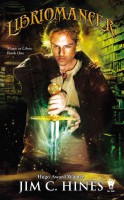
Libriomancer is a Kindle Daily Deal

Today only, Libriomancer is a Kindle Daily Deal, meaning you can head over to Amazon and pick it up for Kindle for only $1.99. This is the first time one of my books has been spotlighted as a KDD, and it’s both awesome and a pretty big deal 🙂

ETA: It looks like several other ebook vendors have jumped on board as well. The book is $1.99 at Amazon, B&N, Kobo, and iBooks!

Libriomancer is the first book in the Magic ex Libris series, and remains the bestselling of all of my books. Io9 called it a “love letter to science fiction and fantasy, with real emotional weight at the center of it — except this version is a rollicking adventure story full of ridiculous little touches … a seriously fun ride for anyone who’s loved geeky books their whole life.”

The book includes:

  • A magic-using librarian from Michigan’s Upper Peninsula
  • A motorcycle-riding dryad
  • An enchanted convertible
  • Smudge the fire-spider
  • Johannes Gutenberg

For those who haven’t read it, here’s the synopsis:

Isaac Vainio has spent the past two years working at the Copper River Library in northern Michigan, secretly cataloguing books for their magical potential, but forbidden from using that magic himself…except for emergencies. Emergencies like a trio of young vampires who believe Isaac has been killing their kind, and intend to return the favor.

Isaac is a libriomancer, brilliant but undisciplined, with the ability to reach into books and create objects from their pages. And attacking a libriomancer in his own library is never a good idea.

But vampires are only the beginning. This was merely the latest in a series of attacks against members of Die Zwelf Portenære, a secret organization founded five centuries ago by Johannes Gutenberg to protect the world from supernatural threats. Among the casualties is Ray Walker, Isaac’s friend and mentor in magic.

Complicating matters further is the arrival of a dryad named Lena Greenwood. Along with a neurotic fire-spider named Smudge, Isaac and Lena set out to find and stop whoever is behind the attacks. But things are worse than Isaac imagined. An unknown killer of unimaginable power has been torturing and murdering humans and vampires alike. And Gutenberg, now more than six hundred years old, has disappeared. If Isaac is to have any hope of preventing all-out war, he will have to truly master the magic of libriomancy.

Assuming he doesn’t lose control and wipe himself from existence first.

The first three Magic ex Libris books are out. I’m working on #4, Revisionary, but the first three form a pretty complete trilogy arc. Just in case you were worried about cliffhangers or anything.

If you don’t have a Kindle, you can still pick up the book and download an app to read it on your computer or smart device.

If you’ve read and enjoyed this series and felt like signal-boosting, I’d be very grateful. If you’ve been thinking of checking out my work, today could be a very good day to pick up the e-book.

My thanks to DAW for continuing to believe in and support Isaac, Lena, Nidhi, and Smudge!

#SFWApro

March 5, 2015 /

Cool Stuff Friday

Cool Stuff Friday jumped the gun this week, on account of something else Jim will be announcing tomorrow.

  • Russian Photographer Captures The Cutest Squirrel Photo Session Ever (Link via Cats, Beavers, and Ducks.)
  • Pets Interrupting Your Reading (Also from Cats, Beavers, and Ducks.)
  • Cats Using Dogs as Pillows
  • LEGO TARDIS Interior, by Thorsten Bonsch. I’ve seen LEGO builds of the TARDIS before, but this takes it to a whole new level.
March 4, 2015 /

Addendum to Scalzi’s Online Stupidity Responses

Earlier this week, John Scalzi posted a list of twelve standard responses to online stupidity.

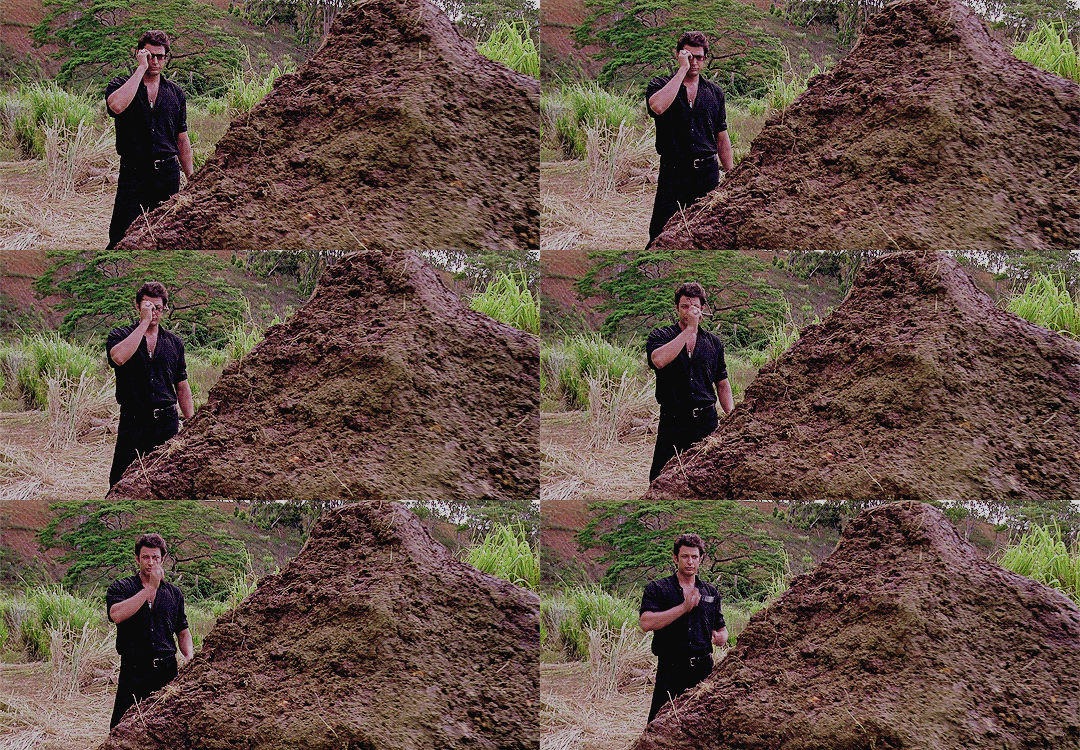
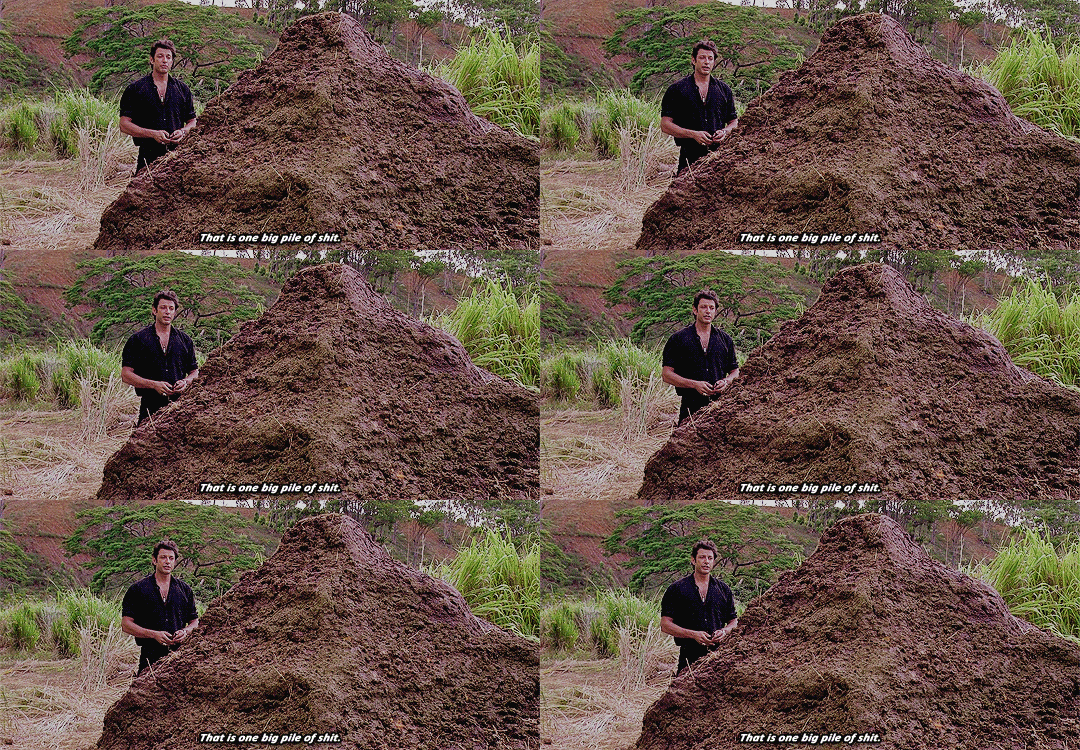
But none of them seemed quite adequate for some of the more ridiculous flare-ups and straw-trolling I’ve seen within SF/F lately. So I would like to propose the following as #13:

JP1

JP2

You’re welcome.

March 2, 2015 /

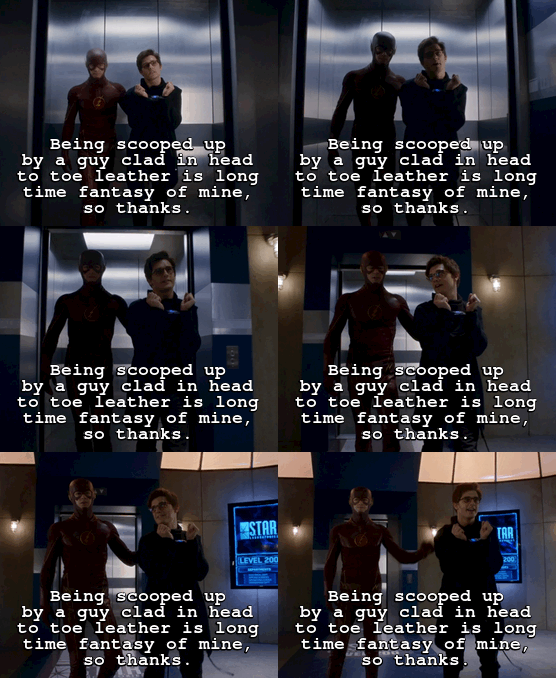
The Flash

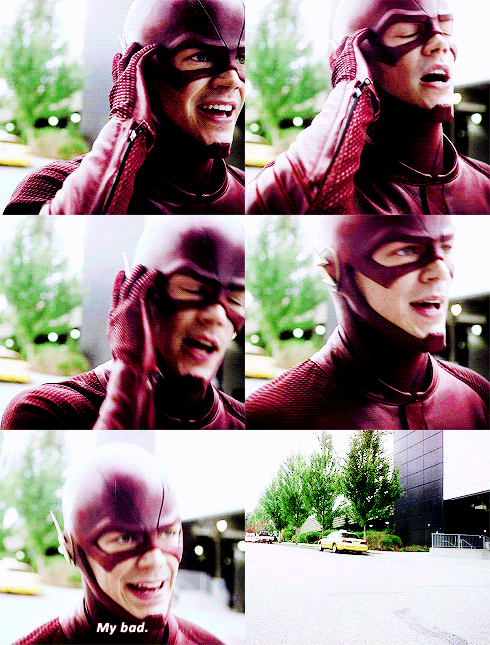
I need to geek out about The Flash. We started watching the show with episode one, and after so much bleak and dark DC comic adaptations, The Flash is an absolute delight. It’s fun. It dives unapologetically into the comics universe, and doesn’t shy away from the more “out there” aspects. For example, one recent instance gives us a cameo of Grodd. That’s right, they added a superintelligent CGI gorilla to the show. And damn if it didn’t work.

I should say up front that the show isn’t perfect. I could do without Flash’s speed being a bit variable depending on the needs of the script. (He’s fast enough to pluck a bullet out of the air, but can’t circle around and take a gun from Captain Cold?) And they haven’t done a great job with their female characters. Barry’s mother is fridged in the first episode, and the other two women are significantly defined by their romantic relationships, unlike the rest of the cast.

Flash - My Bad

But there’s so much The Flash does right:

  • Barry and Joe: When Barry’s father was arrested for the murder of Barry’s mother, it was Detective Joe West who took Barry in. Now that Barry’s grown up, he and Joe have this amazing relationship of love and respect and communication and trust. Joe still looks out for Barry, but he also treats him like an adult. Joe finds out Barry’s secret in the first episode…and they geek out together over some of the things he can do. When Barry demonstrates how he can vibrate to disguise his face and voice, Joe just bursts out laughing. I love these two!
  • Cisco: Cicso Ramon and Dr. Caitlin Snow are employees at S.T.A.R. Labs, working for Dr. Harrison Wells. Cicso is the geek who shows up wearing T-shirts and builds freeze rays and so on, but part of his goofy charm is his need to nickname the various villains who show up from week to week. Comic book names can sound pretty ridiculous, but by turning it into just a thing Cisco does, it works. It also creates opportunities for banter with the other characters. Cisco is more than a two-dimensional geek, and gets to be a deeper character in some episodes, but he’s also just a lot of fun.
  • Dr. Wells: I love the ongoing mystery here. Tom Cavanaugh manages to give us a character who seems to be a villain, but how villainous is he, really? He’s got secrets and lies aplenty, and he’s willing to do whatever it takes to accomplish his goals. And yet he has moments when you want to cheer him on, like the scene with Grodd at the end of episode 14.
  • Diversity: Central City’s police chief David Singh is an openly gay man. So is the villain the Pied Piper. Joe and Iris West are black. Cisco is Puerto Rican. The writers don’t make a big deal out of and of this; that’s just who the characters are. Could the show do better? Sure…I’d love to see some episodes pass the Bechdel Test. But as these things go, I think they’re doing pretty well.

Pied Piper

  • Other: The special effects work, which is impressive, given the small-screen budget. The music is great. They brought in John Wesley Shipp, star of the 90s Flash TV show, to play Barry’s father. He has wonderful crossovers with Oliver Queen from Arrow, in which Oliver shoots Barry in the back. As one does.

Short version: This show makes me happy. It’s right up there with The Librarians in terms of fun and entertainment.

What do the rest of you think?

February 28, 2015 /

Nobody’s Sidekick: Intersectionality in Protagonists – S. L. Huang

Thank you to everyone for the supportive comments and response to this first week of guest posts. I’m especially grateful to the writers for sharing such powerful, personal, and important stories. My plan is to take a week off, then come back with the next round of posts, just to break things up a little.

S. L. Huang addresses a common problem of representation: the idea that straying from the mainstream by more than one axis is too much, too implausible…especially for a protagonist. You can’t be too “different,” because you’ll knock readers out of the story.

Thank you, S. L. Huang, for dismantling that argument so well.


I’m a tangled intersection of underrepresented (female, nonwhite, queer, among others). Even before I had the vocabulary to express it, even before I had the self-awareness to acknowledge it, I remember always looking for people “like me” in media.

That’s not too surprising, is it?

It’s that same twinge of relating one feels when, say, seeing a nerd character who gets to be awesome in a story. I was always looking for those. But I also related to people who matched my identity in other ways—women, Asians, children of immigrants, people who struggled with their own inherited culture. And the older I got, and the more I gravitated toward science fiction and fantasy, the more it happened that the characters I related most to were always the side characters. The support. The ones who never got enough time for their own stories … or whose stories flat-out weren’t told.

I used to think this was just a product of my own preferences being off-beat. But over time I began to realize that the more dimensions of my identity a character matched, the further she was relegated from being a main character. From being important, a hero who would take the helm and drive the story into its own world’s legend.

It started to feel wrong, a piece of reality that kept wobbling like a busted chair leg.

#

I sometimes call intersectionality “the problem of Star Trek captains.” We’ve had five series-leading captains: Kirk (white, male, American), Picard (white, male, European), Sisko (black, male, American), Janeway (white, female, American), and Archer (white, male, American). Not a single one differs in more than a single category from white, male, American.

When I was a teenager, I wrote a piece of Star Trek fanfiction with a captain who was female, half-human-Chinese-from-China, and half-Trill. And I wondered, as my teenaged self, why a series about a globalized Earth—one known for challenging barriers, no less—hadn’t had a similar one. The question made me itch under my skin in a way I couldn’t articulate at the time.

#

“Nobody is a sidekick in their own life,” the saying goes, and growing up I’d never felt like one. In high school, I was bright, precocious, super excited about learning absolutely anything, and excessively opinionated. I never doubted I deserved a seat at the table.

Until I grew up. Gradually, the juxtaposition of my accomplishments with my intersectionality have begun giving me frissons of unreality, as if I’m a monkey playing the piano. I imagine I’m in a book or a movie seeing the moment my character is established: The only girl in the math seminar … who is also nonwhite and queer and will save the world!  The woman who outshoots all the men … who is also the Asian-American daughter of an immigrant and will be our Chosen Protagonist!  And I’m jolted out of the scene, the bulwark of traditional culture whispering “unrealistic” in my ear.

And I’m not the only one who’s been the girl in the math seminar, or the woman who can outshoot all the men. Not even close. My best mathematician friend is a woman who’s smarter than I am, and the last time I taught shooting the most advanced marksman was a markswoman who’d moved to the U.S. from Japan. There are lots of us, and we all kick more than enough ass to lead our own stories. The lack of fictional counterparts in SFFdom … it’s frustrating, and it sometimes makes me feel desperately lonely.

And angry.

And lonely.

Over and over, I’m constantly reminded that the mere fact of my existence is too brash and unusual and radical to be believable as a hero. In SFF worlds, where it seems every lead character is Extraordinary and Chosen and Destined … simply being born on more than one real-life minority axis is a bridge too far.

#

“I’ll be your ethnic sidekick,” I said to my white friend, when she and I were planning to put together a webseries. I said it with a laugh and an eyeroll, in the way one does when one wants to mock something but is still too hesitant to challenge it. Serious-not-serious, funny-not-funny.

“Nah, nobody’s a sidekick,” my friend said. “We’re both too awesome.”

I will always love her for that.

#

Zero Sum GameWhen I started the brainstorming process for what would eventually become my debut novel, I initially assumed I’d write my mathematically-superpowered lead character as a man. Probably a white man. Because … well, because. Something-something-mumble-blah about me being a nonwhite woman, and if I wrote my first lead as a nonwhite woman, no matter how different she was from me, wouldn’t that feel too contrived?
Because people from more than one underrepresented demographic are contrived.

Choosing to make my protagonist not only a woman, but a woman of color, felt … daring. Dangerous. Like people would find fault in her just for that. Not for any failures in writing or character, but for daring to exist, as a nonwhite woman leading her own story.

For existing.

I’m sitting here reading the history of my own thoughts and starting to cry. Because how many times have I looked at the television, or books, or movies, and wanted to scream, “I exist!”

I am the protagonist in my own life, in my own story. I am not anybody’s sidekick.

Neither are my characters. Neither are they.

I have now, thankfully, gotten over the knee-jerk reaction that every axis I assign to a character off the straight white able-bodied American male (etc) is somehow an additional layer of disbelief I’m asking my audience to suspend. That I must justify these choices. If I ever feel that urge, I remind myself I am a perfectly realistic person, someone whose birth needed no special reason.

And I do not need anyone’s permission to be a hero.

So I’m going to continue writing my main characters as nonwhite and female and queer and disabled and nonbinary and non-neurotypical and non-Western as I want, and cross these demographics with each other as much as I want, and make my characters drive their own stories just as much as I drive mine. Because we exist.

We exist.


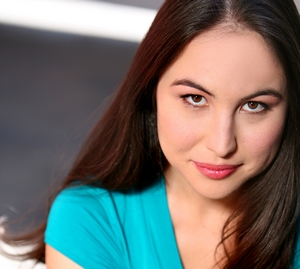
SL “Lisa” Huang uses her MIT degree to write eccentric mathematical superhero fiction, starting with her debut novel, Zero Sum Game. Her short stories have sold to The Book Smugglers and Strange Horizons. In real life, you can usually find her hanging upside down from the ceiling or stabbing people with swords, and online she’s unhealthily opinionated at www.slhuang.com or on Twitter.

SL Huang

February 27, 2015 /

Too Niche – Lauren Jankowski

“Like most asexuals, I spent a good portion of my life feeling broken.”

That’s the very first line of Lauren Jankowski‘s guest blog post. Think about that for a minute. Think about being one of those 1 in 100 people growing up with that message.

And it’s not even a lack of representation, exactly; it’s selective representation. Heroes have to have a romantic storyline. Villains, not so much.

Just let that sink in…


Like most asexuals, I spent a good portion of my life feeling broken. While watching a movie or devouring the fantasy novels I loved, I felt more like the villain than the hero. Not in philosophy or beliefs or actions, but being alone and not experiencing the same desires as heroes often do. The hero’s happily-ever-after almost always involves settling down with another person. Even if they fail to achieve that ending, the audience is made to root for that outcome. You read about the chemistry or sexual tension between characters. As a society, we’re made to want that happy ending: marriage, 2.5 kids, and an overall blissful family.

What about the archetypal villain? They tend to be alone (sometimes widowed, sometimes just because). Oh sure, they occasionally have henchmen, but more often than not, they’re isolated. Their arc tends to be opposite the hero’s, probably because their desires are meant to run counter. They don’t want people or family. They want power and control. This is especially true of women villains: just think of almost any Disney villainess.

Imagine being a teenager and everyone around you is sorting out their identities, discovering new labels and desires, and connecting with a community of people who share this label. Gay, straight, bi, or trans. Some of these terms are used in sex education, and all of them are found in U.S. popular culture. Learning these labels helps people discover who they are.

Now, imagine you don’t fit into any of these labels. You don’t fit into any of these communities. Imagine you can’t find a label for what you feel, your identity, because it doesn’t exist as far as you know. Imagine people telling you who you are, telling you that you’re going to fit into one of these groups eventually. Imagine that never happens.

That was the situation I found myself in: I was perfectly content with platonic friendships but experienced no sexual or romantic desire. Not even the typical crush teenagers are expected to have.  Everyone around me was pairing up, diving into relationships, and I was left feeling rather confused.

I turned to the fantasy novels I loved so much only to have them suddenly fail me. I searched desperately, often late into the night, my eyes and fingers darting over the tiny black print. “Please,” I would silently plea. “I don’t want to be alone. There must be someone like me. Someone who isn’t broken, twisted, and evil.”

There wasn’t, at least not any women. Every now and again, there would be an old white man who seemed to not experience any attraction (Tolkien’s Istari, Lloyd Alexander’s wizard, etc.). The few women found in these pages were either in a romantic relationship or evil. I was alone.

On a whim, I revisited some ancient myths and I found her. A woman who had always been there, but one who I hadn’t realized would become so important to me in the future. Artemis, the Greek goddess of the hunt, a woman who went out of her way to remain unattached. This powerful goddess specifically demanded that she not be romantically involved with any man. And Zeus, the King of the gods, agreed! He didn’t protest or suggest that perhaps she just “hadn’t found the right one.” He basically said, “Yeah, sure” and let her do her own thing. At last, a powerful woman who, like me, didn’t appear to experience sexual or romantic desire and was perfectly fine with that. There was hope!

The years went by and I continued to search through modern fantasy for a fellow asexual woman, even before I had the term for my orientation. Books blended together and my search continued to be fruitless. There just weren’t any modern asexual women in fantasy. Whenever I got frustrated with what seemed to be a pointless search, I always returned to stories about Artemis. Yeah, she did some pretty horrible things, but she was a goddess. All deities had their petty and vindictive moments.

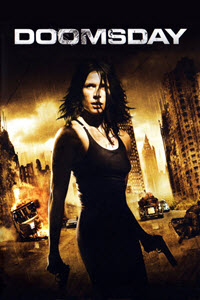
DoomsdayAnd then I found Eden Sinclair in the movie Doomsday. Imagine my shock, sitting in a theater, watching a woman kick so much ass and experience little to no attraction to other characters in her story. She wasn’t evil, she wasn’t a villain. Sinclair was a tough-as-nails soldier who was there to get a job done. And she was an interesting character: an orphan (an adoptee like me), someone who was a mystery. Sinclair kept a cool head in hostile territory and outsmarted every opponent she encountered. There wasn’t a large audience in the theater, but I looked around anyway, curious what my fellow movie-goers thought.

I’ll never forget the feeling that bloomed in my chest when I saw how riveted the few people in the audience were. They were rooting for her. They were rooting for someone who was like me. It didn’t matter that she never flirted with the other characters. It didn’t matter that she was an archetypal lone wolf. She was a badass and the audience loved her for it. I think I may be the only person who got misty-eyed during Doomsday, a post-apocalyptic horror film with copious amounts of gore and violence.

As asexual visibility has gradually begun to form into a movement, there has been a predictable backlash. In genre, many creators have dug in their heels to resist the idea that so small a group needs representation. Whether it’s Stephen Moffat declaring Sherlock Holmes can’t be asexual because he’s too interesting, or the literary agent who told me “asexuality is too niche to move books,” ace phobia and the erasure of asexual voices and characters continues in genre.

When I came out as asexual, I decided to be as open as I could. I would wear my label proudly because it was who I was. Being naturally quiet and introverted by nature, this was a bit intimidating. Then I thought of other girls like me: alone and scared, desperately paging through the stories they loved in the hopes of finding someone like them and being disappointed.

Nobody deserves to feel alone or broken or invisible. People should never be labeled as too niche. Asexuals can be interesting and heroic and adventurous too.


Lauren Jankowski is an aromantic asexual fantasy author and a passionate genre feminist from Illinois. She’s the founder of Asexual Artists (on Tumblr and WordPress), a site dedicated to highlighting the work of asexual-identifying artists in all mediums. Author of the ongoing series The Shape Shifter Chronicles (Sere from the Green, Through Storm and Night, From the Ashes, Haunted by the Keres), she specializes in strong heroines and hopes to bring more badass women (including ace women) to the fantasy genre. She’s also still very much platonically enamored with Artemis.

Lauren Jankowski

February 26, 2015 /

Discovering the Other – John G. Hartness

The guest posts so far have talked about representation in SF/F from the perspective of people seeing themselves–or not seeing themselves–in fiction. But of course, there’s more to it. John Hartness talks about growing up “whitebread,” and how fiction helped him start to consider other perspectives, and to develop a greater degree of empathy.

There are parts of this essay that were difficult to read. There are parts that made me angry. But I also think back to my own childhood, growing up in a time and place where kids played “smear the queer” at recess (designating one random kid as “the queer,” with the rest of the kids trying to tackle him) or thought nothing of chants like, “Fight, fight! The n****r and the white!”

It was messed up. And it’s hard to look back and talk about. Which is why I appreciate John’s honesty, his willingness to look back at that ugliness, and to recognize how stories helped him to humanize those others and change his own behavior.


What in the world is a straight, white, American male from the Southeastern United States doing writing an essay about “the other?” That’s very similar to a question I asked at a convention a year or so ago when I found myself on a panel titled “Writing the Other.” I sat there in front of a roomful of writers and asked why the straight white guy who wrote books about straight white guys was talking about the Other.

I’m about as un-other as you can get in my part of the world. I was raised Presbyterian, by two parents who still lived together. I am white, straight, and I went to college. If you throw out the part about growing up poor, it was pretty much a Beaver Cleaver upbringing, complete with Nancy Drew, Hardy Boys and Trixie Belden novels. Even my reading material was whitebread!

Then I met Chris Claremont, and a little later, Mercedes Lackey. Not in person, but through their work. In 1986 Claremont was writing The Uncanny X-Men, and he, along with Louise and Walter Simonson, crafted the Mutant Massacre storyline, one of my favorite X-Men storylines to this day. It was a far-reaching crossover with massive character shifts that sent waves through the X-Universe that have been felt for the past 30 years. But that wasn’t the important part.

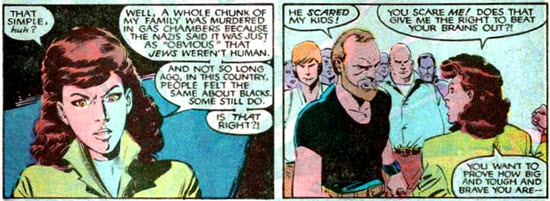
No, for me the important part was one five-panel scene in Uncanny X-Men #210, where Nightcrawler (the blue dude with the tail from the movies) is trapped in a warehouse by a mob that wants to beat him to death for being blue and scary-looking. Kitty Pryde, the young, pretty white girl X-Man, steps out of the shadows and calls the mob leader out on his BS while Colossus (in his non-metallic form) tries to reason with them. The dialogue in this scene opened my eyes to things I’d never considered.

Kitty: “Hey mister, who defines what’s human?”

Mob guy: “It’s obvious, girl. Just open your eyes.”

Kitty: “That simple, huh? Well, a whole chunk of my family was murdered in gas chambers because the Nazis said it was just as ‘obvious’ that Jews weren’t human. And not so long ago, in this country, people felt the same about blacks. Some still do. Is that right?!”

Kitty Pryde

Almost thirty years later, that’s the part that stuck with me. Growing up in rural South Carolina in the 70s and 80s, the Holocaust was something you learned about in History class. There was never a personal connection, because there were no Jewish families in my town. But here was a character that I had been reading for several years, telling me that her family was killed just for being Jewish.

That connected. It connected because I had never paid attention to Kitty Pryde’s Jewish heritage. I assumed she was like me, because she looked like me (only female and pretty). Suddenly I had a realization that these people I read about in history books were real people, and I got that understanding from a fictional character. Dear Alanis – that’s ironic.

But Claremont wasn’t my only teacher, and I certainly had more to learn. Late in high school, I was more immersed in fantasy literature than I had ever been before, on account of having a girlfriend who read the same stuff I did, and having a job to buy my own books. I think it was that same girlfriend who handed me a copy of Mercedes Lackey’s Magic’s Pawn, and said “You have to read this.”

I trusted her taste. After all, I started going out with her because I saw her reading David Eddings’ Demon Lord of Karanda. So I read Magic’s Pawn, and I fell in love with Valdemar, a love affair that has lasted since that first day I sat down to read about Vanyel and Savil and poor doomed ‘Lendel.

Mercedes Lackey writes the doomed outsider teen as well as anyone I’ve ever read, and I was immediately wrapped up in the story of Vanyel. I was so wrapped up in the story that I didn’t really pay attention to the fact that he and Tylendel are both male, and in love. I cried like a baby at Tylendel’s death, and only later noticed that I had just wept for the death of an imaginary person that I would have likely made miserable had he ridden my school bus or been in my gym class.

Tylendel could have been anyone. He could have been the kid we called “fairy” on the bus and punched as he walked by, because he was slightly built and his voice hadn’t changed yet. He could have been Wayne, the pudgy kid down the road that we picked on for being a “band fag.” He could have been any number of real people in my life, and they could have been him. And what I said to them was just as cutting and hurtful as the words in those books. Those books didn’t transform me overnight, but they gradually opened my eyes to the consequences of my behavior, to the power words have. I started, ever so slowly, to change.

I couldn’t call someone “faggot” in the lunchroom anymore without thinking of how hurt Vanyel was by his father’s disapproval, and what kind of pain that kid might be going through at home. I couldn’t make cheap Jew jokes without thinking about how that casual cruelty and dehumanization led to things like the Holocaust and lynchings in my own county. Lackey and Claremont taught me that no matter how different I am from someone, there is a common thread, a connection to be made, if I’m brave enough to let it.

Don’t get me wrong, I didn’t turn from a bully into a saint; it was more like turning from a nerd into a slightly more understanding nerd. But I’d like to think that my friends who live somewhere else on the rainbow know that I’ve got their back. And I have a gay wizard and a Jewish mutant to thank for it. As always, I thank Chris Claremont and Mercedes Lackey for their characters that changed my life.


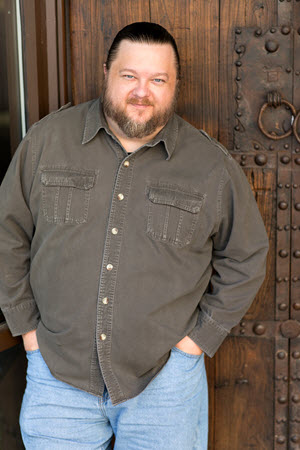
John G. Hartness is a teller of tales, a righter of wrong, defender of ladies’ virtues, and some people call him Maurice, for he speaks of the pompatus of love. He is also the author of The Black Knight Chronicles from Bell Bridge Books, a comedic urban fantasy series that answers the eternal question “Why aren’t there more fat vampires?” He is also the creator of the comic horror Bubba the Monster Hunter series, and the creator and co-editor of the Big Bad series of horror anthologies from Dark Oak Press and Media. 2015 has seen John launch a new dark fantasy series featuring Quncy Harker, Demon Hunter.

In his copious free time John enjoys long walks on the beach, rescuing kittens from trees and recording new episodes of his ridiculous podcast Literate Liquors, where he pairs book reviews and alcoholic drinks in new and ludicrous ways. John is also a contributor to the Magical Words group blog. An avid Magic: the Gathering player, John is strong in his nerd-fu and has sometimes been referred to as “the Kevin Smith of Charlotte, NC.” And not just for his girth.

Patreon | Facebook | Twitter

John Hartness

February 25, 2015 /

I’m Not Broken – Annalee Flower Horne

Annalee Flower Horne’s essay talks about the portrayal of sexual assault survivors in SF/F. While not graphic in detail, I thought a content warning was appropriate. As she notes, it’s not that our genre never writes about assault; it’s that we tend to do it badly.

I’ve always appreciated Princess Leia as an amazing character, but I’d never considered how powerful her portrayal and story might be to a child survivor. After reading this, I doubt I’ll ever look at Leia in the same way.


When I was a kid, I loved Princess Leia.

She was smart and capable; a leader and a hero. And unlike Luke and Han, I could see myself in her. We were both girls.

We were also both assault survivors.

The original trilogy was on a lot in my house. I saw the Twi’lek dancer pulling away from Jabba with terror in her eyes. I saw Leia in that humiliating bikini. I knew what it meant.

These days, I’m mostly just disgusted with how the movie (and the fandom) handled it, but child-me wasn’t disgusted.

LeiaChild-me saw an assault survivor who still got to be a badass. Leia left Tatooine and returned to her life as a leader of the rebellion. No one treated her differently or told her she couldn’t do the things the boys do because someone might rape her. At the end of the movie, she got the dashing rogue and the happy ending.

I wanted to be just like her.

It may seem weird to talk about sexual assault for a series about representation, because sexual assault survivors are all over genre fiction. Jim has written about how much of a cliché it is, and TV Tropes has an extensive list of examples. But seeing representations that bear so little resemblance to your actual experience is damaging. Especially when so many of those representations portray people like you as fundamentally broken.

That’s pretty much the life of a sexual assault survivor in fiction. We don’t get to be the hero. We get to be brutally raped by the villain, leaving the hero—not us, mind you; the hero—scarred and hell-bent on avenging our virtue.

There’s also the trope where writers throw a little agency our way, and we get to avenge our own virtue—but that’s all we get to do. Our entire lives revolve around a thing that was done to us, to which the only “proper” response is murderous rage and possibly world domination.

I used to wonder if I was really a survivor, because I never tried to kill my attacker. He lived in my neighborhood. We made polite conversation at the park, and it was awkward as hell, but I never wanted to hurt him.

I certainly never tried to take over the world. I really don’t know where writers get the idea that sexual assault causes sociopathy in survivors, but it’s lazy bullshit and I wish that trope would just die already.

A lot of folks have suggested that all rape and survivor tropes should just die already. I remember reading one article suggesting that every time a woman on a TV show is raped, a male character should get his balls cut off, for parity.

It took me a long time to unpack why that bothered me, but it comes down to this: I have not been maimed. Popular media often drastically underplays how awful rape is, but it also overplays the fallout. I don’t want to dismiss survivors who really do end up with acute stress disorder and severe PTSD. We need to hear those stories, because the people living them need to know they’re not alone.

But that’s not always how the story goes. One out of every five women is an assault survivor. If you think every woman you know has beaten those odds, it may be because survivors don’t look and act like you think we will. Many survivors get on with our lives. We manage as well as we can. We heal.

For me, the effects have always been subtle. There are books I won’t read and shows and movies I won’t watch. I have a phobia you’d never guess was related to having been assaulted unless I told you.

I show up at work early, because we have open seating, and I want to be sure to get one of the desks with the wall behind it so people can’t get behind me without passing through my peripheral vision first.

I’m happily married, with a steady job and a lot of friends. I build cool stuff and have too many fandoms, and don’t actually spend a whole lot of time thinking about that thing that happened when I was a kid. I wrote most of this post while pacing around my neighborhood alone after midnight, because I know where monsters lurk, and it isn’t the damn bushes.

I still want to see survivors in fiction. I just want them to be whole people. They should have goals and dreams and inner lives that don’t revolve around that one thing that was done to them. They should get to be heroes, villains, lovers, and liars without anyone reducing them to their survivor status.

These days, I understand that this isn’t what Lucasfilm was going for with Leia. Like so many survivors in fiction, her story was only important when the film could pass it off as sexy. Reducing her to her survivor status would have ruined the bikini shot.

I’m glad child-me didn’t get that. I’m glad I was able to project onto Leia the capable survivor I wanted to grow up to be. Her happy ending mattered to me, because it helped me imagine my own.

But now that I’m living that happy ending, I want more than to see my heroes completely stripped of agency for cheap fanservice. I want to see what child-me saw in Leia: survivors who get to save the day, fall in love, and experience the whole range of human emotions without anyone—including the narrator—treating them like they’re broken.


Annalee Flower Horne is an open-source developer and science fiction writer from Washington, DC. You can find her on Twitter, her website, and the Geek Feminism blog. Her fiction has appeared in The Magazine of Fantasy and Science Fiction.

«< 86 87 88 89 90 >»

Now Available!

Slayers of Old
Amazon | B&N | Bookshop | Audible

Blog Archives

Free Fiction

  • Stranger vs. the Malevolent Malignancy, at Podcastle
  • The Creature in Your Neighborhood at Apex Magazine
  • How Isaac Met Smudge at Literary Escapism
  • Gift of the Kites at Clarkesworld
  • Original Gangster at Fantasy Magazine
  • Goblin Lullaby (audio) at PodCastle
  • Spell of the Sparrow (audio) at PodCastle

Banner artwork by Katy Shuttleworth.


↑

Jim C. Hines